

Manuscript accepted on : 25 Mar 2025
Published online on: 17-04-2025
Plagiarism Check: Yes
Reviewed by: Dr. Sanchita Choubey
Second Review by: Dr. Sonam Sneha
Final Approval by: Dr. Eugene A. Silow
Wonders of Endophyte: Plant Growth Enhancement of Capsicum annum L. by Aleo vera endophytes
Simmy Vyas, Yashashvini Lunagariya and Ushma Joshi*
Microbiology Department, Mehsana Urban Institute of Science, Ganpat University, Kherva, Mehsana, Gujarat, India.
Corresponding Author Email: ushmajoshi172@gmail.com
DOI : http://dx.doi.org/10.13005/bbra/3404

ABSTRACT: Endophytes are microorganisms, typically bacteria or fungi that live inside the tissues of plants without causing harm to the host. These microorganisms can reside in various plant parts like leaves, stems, and roots. Endophytes play a significant role in plant health and can contribute to a plant’s adaptation to the environment, eventually contributing to plant growth promotion. These microbes play direct and indirect roles (stress tolerance, disease resistance, root development, structure improvement) in plant growth promotion. Conventional chemical fertilizers restoring agroecosystem. Endophytes of Medicinal plants have been least explored for their potential use in agriculture. In the current study, we have focused on plant growth promotion by endophytic bacterial isolate ART-6 isolated from Aloe vera roots on the growth of Capsicum annum (commonly known as Chilli plant) variety111. An inoculum of bacteria showing good plant growth-promoting attributes in vitro was prepared and applied on seeds by seed coating method. In the current study, ART 6 shows good plant growth promotion and fruit development in treated plants compared to control plants. In seed germination, we have seen 16% increase in endophyte ART-6 coated seeds as compared to control. At the pot study level, plants grown from coated seeds are showing 102.02% increase in the number of fruits compared to control Chilli plants.
KEYWORDS: Endophytes; Medicinal Plants; PGPR; Seed coating; Sustainable agriculture
Download this article as:
| Copy the following to cite this article: Vyas S, Lunagariya Y, Joshi U. Wonders of Endophyte: Plant Growth Enhancement of Capsicum annum L. by Aleo vera endophytes. Biotech Res Asia 2025;22(2). |
| Copy the following to cite this URL: Vyas S, Lunagariya Y, Joshi U. Wonders of Endophyte: Plant Growth Enhancement of Capsicum annum L. by Aleo vera endophytes. Biotech Res Asia 2025;22(2). Available from: https://bit.ly/42zrr9k |
Introduction
Agriculture constitutes a pivotal domain in the realization of sustainable development objectives. In order to meet the burgeoning demands imposed by the escalating global populace, the cultivation of high-yield crops emerges as a significant solution. Agricultural subsidies can indeed influence farmers’ decisions regarding the use of chemical fertilizers, and excessive or improper use of these fertilizers can lead to soil infertility.1 It captures a critical issue in modern agriculture that the widespread use of chemical fertilizers has indeed played a significant role in meeting the food demands of the growing global population. However, this reliance on chemical fertilizers has led to various negative consequences for soil health and sustainability.2 Striking a balance between plant growth and minimizing soil degradation requires a holistic approach to fertilizer management that prioritizes sustainability, efficiency, and environmental stewardship. By reducing chemical fertilizer use and improving fertilizer utilization rates, we can promote healthier soils, cleaner environments, and more resilient agricultural systems.3 Utterly, the application of biofertilizers containing living or dormant plant growth-promoting bacterial cells is indeed considered an eco-friendly alternative to chemical fertilizers, offering several benefits for improved crop production, and sustainable agriculture (Enhanced Nutrient Availability, Improved soil Health, Reduced environmental impact, Cost-effectiveness and long term benefits, Promotion of plant growth and yield).4
The increased agricultural production to meet global food demand, driven by population growth, has indeed relied heavily on conventional farming practices, including the widespread use of artificial fertilizers. However, these practices come with significant human and environmental health effects.5 The principle of sustainable agriculture aims to create farming systems that are both environmentally sound and economically viable, while also promoting social equity and resilience in the face of global challenges such as climate change and food insecurity. 6,7 Sustainability has increasingly become a focal point in mainstream animal and plant production units across various sectors of agriculture.8 Microbial inoculants offer an alternative approach to promoting sustainable agriculture by harnessing the power of beneficial microorganisms to enhance plant growth, health, and productivity. These inoculants consist of specific strains of bacteria, fungi, or other microorganisms that are applied to seeds, soil, or plants to confer various benefits.9 The challenges faced by agriculture in the 21st century, including meeting increasing food demand while minimizing ecological footprint, highlight the urgent need for sustainable solutions. One such solution lies in replacing harsh synthetic surfactants used in pesticides and agrochemicals with eco-friendly alternatives like biosurfactants.10 The adoption of green compounds is essential for achieving sustainable agriculture.11 The rhizosphere, the region of soil directly influenced by plant roots, harbors a diverse and dynamic microbial community crucial for plant health and ecosystem functioning.12
Plant growth promoting rhizobacteria (PGPR)is a group of soil bacteria that establish beneficial interactions with plants, promoting their growth and enhancing their ability to withstand biotic and abiotic stresses.12 PGPR are mostly non-pathogenic microbes which directly or indirectly support plant health.13 PGPR are associated with plant roots and boost plant’s productivity and immunity.14 The multifaceted activities of PGPR within the rhizosphere contribute significantly to plant growth promotion, nutrient acquisition, and defense against pathogens, making them valuable allies in sustainable agriculture practices.15 PGPR represents diverse group of plant-associated microorganisms, these microorganisms encompass various bacterial species that inhabit the rhizosphere and interact with plant roots to promote growth and health. Some common examples of PGPR include species of Pseudomonas, Bacillus, Rhizobium, Azospirillum, and Enterobacter, among others.16 Around 80% of the global population still relies on botanical drugs for healthcare, according to world health organization (WHO) reports. Medicinal plants have been used for centuries in traditional medicine systems worldwide, providing natural remedies for a wide range of ailments. Many modern medicines have their origins in compounds derived from medicinal plants.17 Aloe vera, species belonging to the genus Aloe, have been studied for various therapeutic activities, including anti-bacterial, anti-viral, anti-cancer activity, as well as immunoregulative and hepatoprotective properties.18 Aloe vera is a perennial succulent medicinal plant.19 Agriculture remains the backbone of India’s economy, providing livelihoods for a significant portion of the population and contributing substantially to Gross domestic product (GDP). Ensuring the sustainable growth and development of the agricultural sector is essential for achieving inclusive and equitable economic progress in India. This sector provides approximately 52 percent of the total number of jobs available in India and contributes around 18.1 percent to the GDP.20 Endophytes being ubiquitous associates of plants, shows great promise for sustainable agriculture.21 The complex network of interactions between plants, rhizospheric microbes, and endophytic microbes is of great significance for understanding nutrient cycling, plant health, and stress tolerance. This knowledge can be harnessed to develop innovative strategies for sustainable agriculture, including the manipulation of root system architecture and the development of microbial-based biotechnologies to enhance nutrient acquisition and improve crop productivity under challenging environmental conditions.22
Chili, scientifically known as Capsicum annum L. indeed holds significant importance both as a culinary ingredient and as a source of various bioactive compounds with potential health benefits. Chili is widely used as a food additive, flavoring agent, and natural colorant in cuisines around the world. Its pungent taste and vibrant color enhance the flavor and appearance of many dishes, ranging from savory meals to sauces, condiments, and snacks. Chili has a long history of use in traditional medicine. It has been employed to alleviate various ailments, including coughs, sore throat, rheumatism, gastrointestinal disorders, and pain relief due to its purported medicinal properties.23 Endophyte as a biofertilizer used in food yielding crops as well as other cash crops.24 The cultivation and characterization of endophytes from the roots and leaves of Arnebia euchroma, an endangered medicinal plant native to the Himalayas, were conducted in a study. A total of 60 bacteria, 33 fungi (including 9 yeast), were isolated and further characterized. Among these, the most abundantly found bacteria belonged to the Gamma proteobacteria class, and the most common fungal genus was Ascomycota, following the Euratiales class.25 Medicinal plants are known as traditional medicines from many years. This gain attention after the pandemic COVID-19.26 The soil is indeed of paramount importance, often more than we realize. Maintaining soil fertility is crucial for ecological balance and sustainable agriculture practices. Healthy soil is instrumental in enhancing plant productivity, as it provides essential nutrients and a conducive environment for plant growth. In current study, endophytic bacteria isolated from Aleo vera (ART-6) has been tested on Capsicum annum L. plant to observe their influence regarding plant growth promotion and protection of plant against biotic stress by using ART-6 as a bio-priming agent on chili seeds.
Material and Methods
Isolation of endophyte
Isolation involved sample collection from Aloe vera roots from Mehsana district, Gujarat, India (Lat 23.592185° Long 72.383462°), crushing them using motor and pestle which is followed by surface sterilized by 70% Ethanol, 2% Sodium hypochlorite.27 Aloe vera roots, leaf and gel were suspended in 10ml sterile distilled water using sterile pipettes to make tenfold sterile dilution of samples of bacteria. Ten serial dilutions were prepared. Dilutions were mixed well and allowed to settle down for two minutes. Nutrient agar media was prepared (with autoclaving) and poured in sterile petri plates and allowed to solidify. Spread each dilution on the prepared N-agar media plate, followed by incubation for 24hrs at 37 ˚C in incubator. The colonies were observed for their cultural characteristics and sub-cultured on the same medium for further identification of endophytes.
Characterization of Endophytic isolate
For morphological and biochemical characterization of endophytes, isolates were checked for their Gram reaction and then for biochemical characterization they were inoculated in various media like glucose phosphate broth (for MR-VP test), sugar nutrient broth, Simmon citrate slants.28 After incubation of 48 hrs. various media has been observed for their chemical reaction.
PGPR Characterization
All the endophytic isolates have been inoculated in nitrogen free media, Pikovskaya media, EPS fermentation media, Yeast extract mannitol broth supplemented with glycine and peptone broth for testing in vitro production and solubilization of various nutrients like nitrogen, phosphate, exopolysaccharide, Indole 3- acetic acid and ammonia respectively.29,30
Seed coating
Seeds of Capsicum annum (variety 111) were surface sterilized using a solution containing 2% sodium hypochlorite for 2 minutes followed by 70% ethanol for 1 minute. Sterilized seeds were soaked in a bacterial suspension with a concentration of 10-7 colony-forming units per milliliter (CFUmL-1) for 2 hours. Control seeds were soaked in sterile distilled water (ddH2O). After soaking, the seeds were removed from the liquid and placed on autoclaved Whatman filter paper inside Petri plates. Before placing the seeds, the filter paper was moistened with either bacterial suspension or sterile ddH2O.32
Germination study
Each Petri plate contained 10 seeds, and the experiment was set up with 3 replicates for each treatment. Laboratory experiment where germination tests were conducted using. The Petri plates containing the seeds were placed in a growth chamber with a daily temperature of 20 ± 1°C and incubated for 6 days.32 The seeds were monitored regularly during the incubation period. At the end of the incubation period, the germination index or germination percentage was determine using Equ-1.33
Germination Index = number of germinated seeds /Total no of seeds×100 (1)
Pot and plant growth parameter study
To set up the experiment with six pots labeled, three pots were labeled as “Control” and the remaining three pots as “ART-6” to indicate the treatment groups. Pots were filled with about 1 kg of each processed soil sample. Ten chili seeds was sown in each pot arranged in triplets.34 To assess the growth and development of the chili plants were uprooted from pot at intervals, such as after 30 and 60 days from the time of sowing (DAS).35
Results
Characterization of Endophytes
Eight potent isolates were studied for their morphological characterization using Gram staining, amongst which five isolates are Gram-negative and 3 isolates are Gram-positive bacteria.
Table 1: Morphological characterization of Aleo vera endophyte
| PLANT PART(Endophyte) | SHAPE | ARRANGEMENT | GRAM’S REACTION |
| Gel (AGL-1) | Bacillus | Single | Gram -positive |
| Gel (AGL-2) | Rod | Single | Gram-negative |
| Gel (AGL-3) | Short rod | Single | Gram-positive |
| Gel (AGL-4) | Bacillus | Chain | Gram- negative |
| Gel (AGL-5) | Bacillus | Cluster | Gram-negative |
| Root (ART-6) | Short rod | Single | Gram-negative |
| Root (ART-7) | Coco bacillus | Single | Gram-negative |
| Leaf (ALF-8) | Round | Cluster | Gram-positive |
Table 2: Cultural characterization of Aleo vera endophyte
| Endophyte | SIZE | SHAPE | MARGIN | ELEVATION | SURFACE | CONSISTENCY | OPACITY | PIGMENTATION |
| AGL-1 | Medium | Round | Entire | Flat | Smooth | Dry | Translucent | White |
| AGL-2 | Medium | Round | Entire | Convex | Alveolate | Dry | Translucent | White |
| AGL-3 | Small | Punctiform | Entire | Flat | Smooth | Dry | Translucent | White |
| AGL-4 | Medium | Round | Repand | Flat | Smooth | Dry | Opaque | Yellowish white |
| AGL-5 | Medium | Irregular | Undulate | Flat | Smooth | Dry | Translucent | White |
| ART-6 | Small | Round | Entire | Convex | Medium | Moist | Translucent | White |
| ART-7 | Small | Round | Entire | Flat | Smooth | Moist | Translucent | White |
| ALF-8 | Small | Round | Entire | Flat | Smooth | Moist | Translucent | White |
Plant growth-promoting parameter
As shown in Table 4, various tests like symbiotic association, Asymbiotic association, checking of ammonia and hydrogen cyanide gas production, IAA production and EPS production were done for identifying its PGPR characteristics.
Table 3: Biochemical and PGPR characteristics of selected endophyte (ART-6)
| Endophyte | Methyl Red | Voges Proskauer | Citrate Utilization | Starch Hydrolysis | Casein Hydrolysis | Lipid Hydrolysis | Urea Hydrolysis | H2s Production | Nitrate Reduction Test | Indole Proguction | Ammonia Production |
| AGL-1 | + | + | + | + | + | – | + | + | + | + | ++ |
| AGL-2 | + | + | – | + | + | – | + | + | + | – | + |
| AGL-3 | – | + | + | + | + | – | – | + | + | + | – |
| AGL-4 | + | – | – | – | + | – | – | + | + | + | +++ |
| AGL-5 | – | + | + | + | + | – | – | + | + | + | ++ |
| ART-6 | – | – | + | + | + | – | – | + | + | + | + |
| ART-7 | – | + | + | + | + | – | + | + | + | + | ++ |
| ALF-8 | + | – | + | + | + | – | – | + | + | – | ++ |
Key: + = positive , ++ = produced in high amount, +++ = produced in very high amount, – = negative
Table 4: PGPR Characterization of Aleo vera endophytes
| Endophyte | AsymbioticN2 fixation | Symbiotic N2 fixation | Ammonia test | Hydrogen cyanide test | IAA production | EPS production |
| AGL-1 | – | + | – | – | + | + |
| AGL-2 | – | – | – | – | + | ++ |
| AGL-3 | + | + | – | + | + | + |
| AGL-4 | + | + | – | + | + | + |
| AGL-5 | + | + | – | + | + | + |
| ART-6 | + | + | – | – | +++ | ++ |
| ART-7 | + | – | – | + | + | + |
| ALF-8 | + | + | – | ++ | + | + |
Key: + = positive, ++ = produced in high amount, +++ = produced in very high amount, – = negative
(Note: All the test data shown in the table 3 and 4 has been performed in triplicate for statistical validation)
Seed germination
Reproduction is a pivotal phase in the life cycle of plants (Pollination. Fertilization, Seed formulation and Germination). The interplay between these hormonal signals, along with environmental factors, determines the timing and conditions under which seeds germinate.37 By understanding and manipulating these hormonal pathways, researchers and agricultural practitioners can develop strategies to optimize seed germination, improve crop establishment, and enhance overall plant productivity and resilience in various environmental conditions. Seed biopriming involves the pre-treatment of seeds with beneficial microorganisms before planting. This process aims to enhance seed germination, seedling vigor, and overall plant performance, particularly under stress conditions.38 Seed treatment is an important component of modern agricultural practices, helping farmers to protect their crops from various threats and maximize their yield potential from the moment of sowing.39
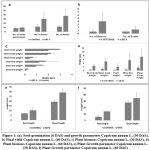 |
Figure 1: a) Seed germination (6 DAS) and growth parameters Capsicum annum L. (30 DAS), b) Final yield Capsicum annum L. (60 DAS), c) Plant biomass Capsicum annum L. (30 DAS) , d) Plant biomass Capsicum annum L. (60 DAS), |
(Note: Data shown in the graph is the mean value of triplicates and standard deviation shown as an error bar).
Pot study
In the case of 30DAS, longer roots indicate better root development, which is crucial for nutrient uptake and anchorage. The increase in root length suggests that the isolate ART-6 may enhance root growth, potentially improving the plant’s ability to access nutrients and water from the soil. Increased shoot length typically indicates better overall plant growth and vigour. The fact that the ART-6 coated seeds resulted in longer shoots implies that this isolate might promote shoot development, leading to healthier and more robust plants. The increased weight of the plants from the ART-6 group suggests enhanced biomass production. This could be attributed to improved photosynthetic efficiency, nutrient uptake, or overall growth stimulation induced by the isolate. When we compared the result of control and ART-6 after 30 days we observed visible difference while we go through the growth parameters study. Firstly, number of seed germinates in control was 8.33 ± 9.57 while in ART-6 it is 9.66 ± 0.57. This suggests ART-6 have positive effects on seed germination compared to the control (Fig.1-a).
Plant Growth parameter study
Another parameter to check plant growth is number of leaves, in control it is observed 12± 6.24 although in ART-6 were 30.33± 16.16 (Fig.1-a). We can visibly observe the difference, these more growth of leaves in ART-6 indicates positive side of our isolate. Now, Shoot length’s mean and mean deviation of Control were 28± 3.04 cm and of ART-6 were 34.9± 8.55 cm good result of ART-6 observed in terms of difference that is 6.9 cm. Root length of plants is important parameter to study, and also more the length of root it goes deeper in soil which provides sufficient nutrition to plants and indirectly affects the health of plant, controlchili plant have 5.6± 1.63 root length while ART-6 is showing 13.93± 1.22 this visibly difference observed is 8.33 cm in ART-6 (Fig.1-e). Now the main parameter fruiting, fruiting is crucial for plants because it leads to seed production which plays role in plant population, in Control 0.66 ± 0.57 fruiting while in ART-6 plant were showing 1.33± 1.15, comparing both ART-6 have a greater number of fruits; The number of nodes developed in control were 12± 3.0 and in ART-6 were 37.33± 15.56 (Fig.1-a). Number of nodes directly affecting the number of branches and it is directly influencing flowering and fruiting. Here the difference is in number of nodes is reasonably very high which indicates endophyte ART-6 once again having positive effects on chili plant. Distance between nodes in control were 3.23± 1.00 while in ART-6 were 6.16± 3.51. Crucial growth parameter of plants is root weight, root weight of control has been observed as 0.44 ± 0.12 gm and ART-6 showing 1.52 ± 0.82, shoot weight of control were 0.80±0.73 and ART-6 have 4.90±1.69. Total dry weight of control was 0.57± 0.54 while of ART-6 were 5.61± 3.79 (Fig.1-e, f). The more weight of root, shoot and fruit directly indicates plant’s good health.
Discussion
Characterization of Endophytes
Our selected isolate ART-6 has been observed as a Gram-negative short rod arranged singly (Table 1) and forming small, convex, translucent, moist colony with white pigment on Nutrient agar medium (Table 2). Bacterial endophyteART-6 is able to degrade lipid, starch and citrate, it is also have been observed that it can produce Indole and ammonia in vitro (Table-3).
Plant growth-promoting parameter
Amongst all eight endophytic isolates isolated from Aleo vera endophyte ART-6 is showing very good plant growth promotion activity as it can fix nitrogen, solubilize phosphate, produce a very high amount of HCN and EPS which can directly and in-directly promote plant growth.
Seed germination
A higher number of seeds germinated in the ART-6 group indicates that this isolate may enhance germination rates or seed viability. This could be due to improved seed coat integrity or the activation of germination-promoting mechanisms by the isolate. Capsicum annum L. seeds treated with endophyte ART-6 has shown 96% seed germination and 3367.2 seed vigor index (SVI) in comparison to the highest reported 92% seed germination and 973.7 SVI of chili seeds treated with native rhizobacteria Iso32 by Bhanothu et al., 2024.40
Pot study
The plants from seeds coated with isolate ART-6 exhibited flowering and fruiting within the observed 60-day period. This indicates that the application of isolate ART-6 likely promotes or enhances the reproductive processes of the plants, leading to earlier or more prolific flowering and fruiting compared to the control group. In contrast, the control group, where no coating was applied to the seeds, did not show any signs of flowering or fruiting within the same time frame. This suggests that the natural reproductive processes of the plants may have been delayed or inhibited in the absence of isolate ART-6. Additionally, the observation of yellowing leaves in the control group further suggests that these plants may be experiencing some form of stress or nutrient deficiency, which could be contributing to the lack of flowering and fruiting. This emphasizes the potential beneficial effects of isolate ART-6 in promoting healthy plant growth and development. The results indicate that coating seeds with isolate ART-6 positively influences the flowering and fruiting of the plants, while the absence of this treatment in the control group leads to a lack of reproductive activity and potential signs of stress in the plants.After 60 days when we go for growth parameters study, our growth parameter is flowering, in control mean and mean deviation in control were 0.33+-0.57 flowering while in ART-6 were 4 ± 2.94 which results in tremendous difference in flowering (Fig.1-b).
Plant Growth parameter study
Our bacterial endophyte of Aleo vera (ART6) has shown a significant increase in plant length, root fresh weight and shoot fresh weight by 45.35%, 474.7%, 508.1% respectively in comparison to the highest reported effect of 30.10%, 56.38% and 43.18% by Chili endophytes Burkholderia pyromania, Pseudomonas rhodesiae, and Pseudomonas baetica.41
Conclusion
Selected endophytic isolate of Aleo vera (ART-6) is showing goof plat growth promotion activity in vitro as well as in vivo in selected plant Capsicum annum L. plants during pot study. This endophyte can be used further as upcoming biopriming technology tool for enhancing plant growth. As this endophyte (ART-6) is ability to solubilise phosphate, nitrogen fixation and has shown ability to produce Auxin, exopolysaccharide, and HCN, it has shown good impact on plant growth of Capsicum annum L. in terms of plant growth and production yield. This bacterial endophyte can be furtherly tested at field level as one of the sustainable approaches of agriculture.
Acknowledgement
Authors are very thankful to Mr. Nehal Rami, Assistant Professor, Microbiology Department, Faculty of Science, Ganpat University for providing facilities to conduct research work. The authors thankful to Dr. Parth Singh Rahevar, Assistant professor, Faculty of Agriculture, Ganpat University, for providing research facilities for this study.
Funding Sources
The author(s) received no financial support for the research, authorship, and/or publication of this article.
Conflict of Interest
The authors do not have any conflict of interest.
Data Availability Statement
This statement does not apply to this article.
Ethics Statement
This research did not involve human participants, animal subjects, or any material that requires ethical approval.
Informed Consent Statement
This study did not involve human participants, and therefore, informed consent was not required.
Clinical Trial Registration
This research does not involve any clinical trials.
Permission to reproduce material from other sources
Not Applicable
Author Contributions
Simmy vyas- Conceptualization, Methodology, Scientific inputs.
Yashashvini Lunagariya- Methodology,Data Collection, Writing – Original Draft.
Ushma Joshi -Visualization, Supervision, Project Administration, Analysis, Review and editing
References
- Guo L, Li H, Cao X, Cao A, Huang M. Effect of agricultural subsidies on the use of chemical fertilizer. Journal of Environmental Management. 2021;299:113621.
CrossRef - Singh K, Gera R, Sharma R, et al. Mechanism and application of Sesbania root-nodulating bacteria: an alternative for chemical fertilizers and sustainable development. Archives of Microbiology. 2021;203(4):1259-1270.
CrossRef - Sun HY, Sun YZ, Zhou L, Du DF, Guo W. [Effects of chemical fertilizer reduction combined with humic acid bio-fertilizer on soil biological properties and dry matter mass of maize.]. PubMed. 2022;33(3):677-684.
- Tariq M, Jameel F, Ijaz U, Abdullah M, Rashid K. Biofertilizer microorganisms accompanying pathogenic attributes: a potential threat. Physiology and Molecular Biology of Plants. 2022;28(1):77-90.
CrossRef - Aloo BN, Tripathi V, Makumba BA, Mbega ER. Plant growth-promoting rhizobacterial biofertilizers for crop production: The past, present, and future. Frontiers in Plant Science. 2022;13.
CrossRef - Lykogianni M, Bempelou E, Karamaouna F, Aliferis KA. Do pesticides promote or hinder sustainability in agriculture? The challenge of sustainable use of pesticides in modern agriculture. The Science of the Total Environment. 2021;795:148625.
CrossRef - Kumar A, Singh SK, Kant C, et al. Microbial Biosurfactant: a new frontier for sustainable agriculture and pharmaceutical industries. Antioxidants. 2021;10(9):1472.
CrossRef - Bose S, Biswas S, Pakhira R, Nandi S. Chapter-5 Strategies for Agricultural Sustainability. AkiNik Publications® New Delhi. 2023:79.
- Datta S, Hamim I, Jaiswal DK, Sungthong R. Sustainable agriculture. BMC Plant Biology. 2023;23(1).
CrossRef - Datta D, Ghosh S, Kumar S, et al. Microbial biosurfactants: Multifarious applications in sustainable agriculture. Microbiological Research. 2023;279:127551.
CrossRef - Sachdev DP, Cameotra SS. Biosurfactants in agriculture. Applied Microbiology and Biotechnology. 2013;97(3):1005-1016.
CrossRef - Wang H, Liu R, You MP, Barbetti MJ, Chen Y. Pathogen Biocontrol using Plant Growth-Promoting Bacteria (PGPR): Role of Bacterial Diversity. Microorganisms. 2021;9(9):1988.
CrossRef - Bukhat S, Imran A, Javaid S, Shahid M, Majeed A, Naqqash T. Communication of plants with microbial world: Exploring the regulatory networks for PGPR mediated defensesignaling. Microbiological Research. 2020;238:126486.
CrossRef - Yang J, Kloepper JW, Ryu CM. Rhizosphere bacteria help plants tolerate abiotic stress. Trends in Plant Science. 2008;14(1):1-4.
CrossRef - Kong Z, Liu H. Modification of rhizosphere microbial communities: A possible mechanism of plant growth promoting rhizobacteria enhancing plant growth and fitness. Frontiers in Plant Science. 2022;13.
CrossRef - Meena M, Swapnil P, Divyanshu K, et al. PGPR‐mediated induction of systemic resistance and physiochemical alterations in plants against the pathogens: Current perspectives. Journal of Basic Microbiology. 2020;60(10):828-861.
CrossRef - Sen T, Samanta SK. Medicinal plants, human health and biodiversity: a broad review. Biotechnological applications of biodiversity. 2015:59-110.
CrossRef - Gao Y, Kuok KI, Jin Y, Wang R. Biomedical applications of Aloe vera. Critical reviews in food science and nutrition. 2019 Jun 27;59(sup1):S244-56.
CrossRef - Majumder R, Das CK, Mandal M. Lead bioactive compounds of Aloe vera as potential anticancer agent. Pharmacological Research. 2019;148:104416.
CrossRef - Singh, Vishvendra& Faujdar, Krishna & Garg, D & Singh, Akansha &Taqa, Amer. (2023). Importance of Agri-entrepreneurship in Indian economy: A Review. 12. 2319-7463.
- Pandey SS, Jain R, Bhardwaj P, et al. Plant probiotics – Endophytes pivotal to plant health. Microbiological Research. 2022;263:127148.
CrossRef - Verma SK, Sahu PK, Kumar K, et al. Endophyte roles in nutrient acquisition, root system architecture development and oxidative stress tolerance. Journal of Applied Microbiology. 2021;131(5):2161-2177.
CrossRef - Darko E, Hamow KA, Marček T, Dernovics M, Ahres M, Galiba G. Modulated light dependence of growth, flowering, and the accumulation of secondary metabolites in chilli. Frontiers in Plant Science. 2022;13.
CrossRef - Sapkal, V. Kshirsagar, A. Shaikh, A. Gulave, Y. Mule, and B. Pawar, “A Review on Endophytes as a Biofertilizer,” 2023.
- Jain R, Bhardwaj P, Pandey SS, Kumar S. Arnebiaeuchroma, a Plant Species of Cold Desert in the Himalayas, Harbors Beneficial Cultivable Endophytes in Roots and Leaves. Frontiers in Microbiology. 2021;12.
CrossRef - Khadka D, Dhamala MK, Li F, Aryal PC, Magar PR, Bhatta S, Thakur MS, Basnet A, Cui D, Shi S. The use of medicinal plants to prevent COVID-19 in Nepal. Journal of ethnobiology and ethnomedicine. 2021 Dec;17:1-7.
CrossRef - Abdelshafy Mohamad, O.A., Ma, J.B., Liu, Y.H., Zhang, D., Hua, S., Bhute, S., Hedlund, B.P., Li, W.J., & Li, L. (2020). Beneficial endophytic bacterial populations associated with medicinal plant Thymus vulgaris alleviate salt stress and confer resistance to Fusarium oxysporum. Front. Plant Sci., 11(2):1–17.
CrossRef - Joshi, Ushma & Ansari, Mohammed Faisal & Tipre, Devayani. (2023). Plant growth-promoting attributes of Indian gooseberry (Phyllanthus embilica) endophytes. Advances in Bioresearch. Special issue 1,2023. 285-297.
- Ahmad F, Ahmad I, Khan MS. Screening of free-living rhizospheric bacteria for their multiple plant growth promoting activities. Microbiological research. 2008 Mar 15;163(2):173-81.
CrossRef - Roesler BCS, Vaz RG, Castellane TCL, De Macedo Lemos EG, Burkert CAV. The potential of extracellular biopolymer production by Mesorhizobium from monosaccharide constituents of lignocellulosic biomass. Biotechnology Letters. 2021;43(7):1385-1394.
CrossRef - Fiodor A, Ajijah N, Dziewit L, Pranaw K. Biopriming of seed with plant growth-promoting bacteria for improved germination and seedling growth. Frontiers in Microbiology. 2023;14.
CrossRef - Brockwell J, Whalley RD. Studies on seed pelleting as an aid to legume seed inoculation. 2. Survival of Rhizobium meliloti applied to medic seed sown into dry soil. Australian Journal of Experimental Agriculture. 1970;10(45):455-9.
CrossRef - Zhou Y, Hao L, Ji C, et al. The Effect of Salt-Tolerant Antagonistic Bacteria CZ-6 on the Rhizosphere Microbial Community of Winter Jujube (Ziziphus jujuba Mill. “Dongzao”) in Saline-Alkali Land. BioMed Research International. 2021;2021:1-13.
CrossRef - Missé PTE. Methodology to conduct a pot trial to determine the fertility of three different farm soils. SSRN Electronic Journal. January 2018.
- Singh V, Upadhyay RS, Sarma BK, Singh HB. Trichoderma asperellum spore dose depended modulation of plant growth in vegetable crops. Microbiological Research. 2016;193:74-86.
CrossRef - Penfield S. Seed dormancy and germination. Current Biology. 2017;27(17):R874-R878.
CrossRef - Finch‐Savage WE, Leubner‐Metzger G. Seed dormancy and the control of germination. New Phytologist. 2006;171(3):501-523.
CrossRef - Mahmood A, Turgay OC, Farooq M, Hayat R. Seed biopriming with plant growth promoting rhizobacteria: a review. FEMS Microbiology Ecology. 2016;92(8):fiw112.
CrossRef - Sharma KK, Singh US, Sharma P, Kumar A, Sharma L. Seed treatments for sustainable agriculture-A review. Journal of Applied and Natural Science. 2015;7(1):521-539.
CrossRef - Shiva B, Srinivas P, Khulbe D, Rithesh L, Kishore Varma P, Tiwari RK, Lal MK, Kumar R. Isolation and characterization of native antagonistic rhizobacteria against Fusarium wilt of chilli to promote plant growth. PeerJ. 2024 Jun 25;12:e17578.
CrossRef - Zhang T, Jian Q, Yao X, Guan L, Li L, Liu F, Zhang C, Li D, Tang H, Lu L. Plant growth-promoting rhizobacteria (PGPR) improve the growth and quality of several crops. Heliyon. 2024 May 18;10(10):e31553.
CrossRef
Abbreviation
PGP – Plant growth promoting
PGPR – Plant growth promoting Rhizobacteria
EPS- Exopolysaccharide
HCN- Hydrogen cyanide
GDP- Gross domestic product
IAA- Indole-3-Acetic acid
DAS- Days after sowing

This work is licensed under a Creative Commons Attribution 4.0 International License.