

Manuscript accepted on : 18-09-2025
Published online on: 29-09-2025
Plagiarism Check: Yes
Reviewed by: Dr. Ichrak Jaouadi
Second Review by: Dr. Ozlem Coşkun
Final Approval by: Dr. Eugene A. Silow
Exploring the Future of Medicine: A Comprehensive Review of Emerging Drug Technologies
Galanki Vasantha1*, Singuluri Jashnavi Naga Sravya2 and Bollipalli Sanath1
1Pharmacology department, Vignan Institute of Pharmaceutical Technology, JNTUGV, Visakhapatnam, India.
2Pharmaceutical analysis, Jawaharlal Nehru Technological university Kakinada, India.
Corresponding Author E-mail:drvasanthaniper@gmail.com
ABSTRACT: Emerging drug technologies have the ability torevolutionize the healthcare sector.These include 3D printing, nanotechnology, artificial intelligence (AI) and machine learning, and pharmacogenomics etc. One of the most promising technologies is 3D printing, which enables the production of tailored dosage forms, regenerative therapies, and implantable medical devices. 3D printing allows for the creation of pharmaceutical assets that can be designed in different forms, sizes, shapes, and release mechanisms, thereby enhancing patient compliance and reduces adverse effects.Another advanced technology is Machine learning & AI.These can work by making application of large datasets, advanced computing, and cloud storage, artificial intelligence-specifically, deep learning is automating attribute extraction and enhancemolecular design to speedup drug development. Nanotechnology has its importance in drug delivery, molecular imaging, and early illness diagnosis. In genome engineering, CRISPR/Cas9 technology is revolutionary because it offers targeted gene alteration for disease repair and advanced gene therapyas evidenced by recent approvals in the US and Europe. This review emphasizes not only the individual contributions of these technologies but also their potential intersections-for example, AI guided nanoparticle design or 3D printed drug delivery systems-that highlight their collective role in advancing personalized medicine. Together, these innovations provide novel solutions for drug discovery and therapy, with the potential to improve compliance, lower healthcare costs, reduce adverse reactions, and enhance accessibility to treatment.
KEYWORDS:
Artificial intelligence; CRISPR/Cas9 technology; Emerging drug technologies; Genome engineering; Gene therapy; Nanotechnology; Precision medicine; Personalized drug delivery
| Copy the following to cite this article: Vasantha G, Sravya S. J. N, Sanath B. Exploring the Future of Medicine: A Comprehensive Review of Emerging Drug Technologies. Biotech Res Asia 2025;22(3). |
| Copy the following to cite this URL: Vasantha G, Sravya S. J. N, Sanath B. Exploring the Future of Medicine: A Comprehensive Review of Emerging Drug Technologies. Biotech Res Asia 2025;22(3). |
Introduction
The field of modern medicine is standing on the cusp of a profound transformation, driven by revolutionary technological advancements. Among these, 3D printing has emerged as a pivotal force, evolving from its origins in engineering and design to become a groundbreaking tool in the pharmaceutical industry.1 This technology now enables the creation of highly personalized drug formulations, regenerative treatments, and advanced implantable devices.By controlling the shape, size, and release characteristics of medications, 3D printing promises to enhance medication adherence, diminish adverse effects, and enhance patient care in unprecedented ways.1
Alongside 3D printing, Machine learning and artificial intelligence (AI) are set to transform the context of drug discovery and development.2 These tools are facilitating the discovery of novel drug candidates by fine tuning molecular designs and improving the extraction of vital properties from large databases.leveraging big data, cloud computing, and large-scale computational models, AI is fundamentally reshaping pharmaceutical research and development, opening new avenues in drug delivery systems, molecular imaging, cancer detection, and personalized treatment approaches.
Furthermore, gene therapy, particularly with innovations like the CRISPR-Cas9 technique, marks a significant leap toward precision medicine.3 This groundbreaking tool allows for the targeted editing of genes, offering hope for curing genetic disorders and advancing therapies for previously untreatable diseases.3 With recent approvals of gene therapies for monogenic and genetically-defined disorders in both the US and the European Union, the potential of these technologies is becoming a tangible reality.
This review explores the convergence of these emerging technologies—3D printing, artificial intelligence, machine learning, and gene editing—and their potential to reshape the future of medicine.By evaluating their current applications and envisioning their future possibilities, this article seeks to offer a comprehensive perspective on how these innovations and their integrations will impact treatment strategies, improve patient outcomes, and foster greater accessibility in the medical field.
Overview of Current Challenges in Medicine
The ever-changing world of medicine has a range of persistent challenges that reveal the ongoing nature of global health care. Some issues include antimicrobial resistant, chronic illness management and increasing age population and improved therapies for cancers.4Mental illnesses are getting worse, there are also differences in accessibility of medicine, while vaccination refusal is on rise among population and healthcare costs increase towards bad public’s state.5
In line with these objectives include: equitable health care access, improved efficiency in healthcare delivery system, as well as improvement of public health preparedness. Moreover, environmental health problems such as those related to the changing climatic conditions, pollution, and maintaining health data also form part of this complex web in society.6
Addressing them requires a multi—dimensional approach that combines research and innovation and changes in policies, which is the resolve to improve healthcare globally, taking into account changing world situations.
Such ongoing healthcare issues require innovative drug technologies.It addresses antimicrobial resistance by designing alternative antibiotics, managing health issues associated with chronic illnesses, and handling care needs for geriatric populations. They provide the basis for better development of drugs for anti-cancer action as well as a greater number of medications towards mental health.6
They play a critical role in vaccine development, cost reductions on treatment methods, efficient healthcare delivery, and tackling of environmental health issues. Moreover, they facilitate safe keeping of health information.These innovative drug technologies revolutionize many sectors of the healthcare including infections, chronic illness, as well as environmental problems.7
Emerging Drug Technologies
3D Printing in Pharmaceuticals
3D printing, also referred as the technique of additive production, is being recognized as a groundbreaking technology in the pharmaceutical sector. It allows for the precise and customizable production of drug dosage forms & Drug delivery systems. This technology builds three-dimensional structures layer by layer, providing innovative prospects for advanced medication delivery and tailored therapeutics.6
Technologies of 3D Printing
In the pharmaceutical sector, three key 3D printing technologies are commonly utilized.
Fused Deposition Modelling (FDM)
Works by extruding thermoplastic filaments in successive layers, making it particularly suitable for producing solid oral dosage forms which include tablets and capsules.7
Stereolithography (SLA)
Uses a Ultra-violet laser to cure liquid resin, resulting high accuracy and flawless surface finishes, which are perfect for fabricating complicated drug delivery devices.7
Selective Laser Sintering (SLS)
Its has a laser to fuse pulverized materials, allowing the fabrication of robust components, including drug delivery systems, implants, and tissue scaffolds.7
Each of these 3D printing methods is selected for its unique advantages, playing a vital role in shaping the growth of personalized drug forms and advanced pharmaceutical components. Let us briefly explore each technology.
Fused Deposition Modelling
Fused Deposition Modelling (FDM), also called as Fused Filament Fabrication (FFF), has been widely investigated for use in pharmaceutical applications.In this method, a thermoplastic polymer filament is constantly supplied through a heated nozzle, where it is melted just above its glass transition temperature. The melted material is then accurately deposited layer by layer on a substrate and let it cool, forming the desired 3D object.This extrusion-based technology is highly versatile and can utilize a variety of materials, including pastes, polymers, silicones, suspensions, and semisolids.However, in FFF applications, solid polymer filaments are primarily used to create geometrically designed drug delivery systems with customized release profiles, scaffolds, and drug-eluting devices.8
Hot melt extrusion (HME) is a key technique for producing continuous filaments from thermoplastic polymers for use in FDM printing. Commonly used thermoplastic polymers, which are considered safe for pharmaceutical applications, consist of ethylene vinyl acetate (EVA), polylactic acid (PLA), polyvinyl acetate (PVA), and acrylonitrile-butadiene-styrene (ABS). Active pharmaceutical ingredients (APIs), which are chosen according to the unique characteristics of the polymers, are frequently combined with the feedstock filaments. These characteristics might include swellable/erodible qualities (like hydroxypropyl methylcellulose or HPMC), enteric qualities (like Eudragit® L 30D55), rapid solubility (like polyvinyl pyrrolidone), or insolubility (like PVA or Eudragit® RL). These tailored filaments are ideal for 3D printing capsules and other dosage forms, whether designed for immediate or controlled release.8
A key benefit of HME is its ability to create homogeneous solid dispersions of thermally stable drugs and excipients within the printable filament material—something that is difficult to achieve using other techniques.This process ensures efficient manufacturing with minimal material waste.FDM is a desirable alternative for developing pharmaceutical formulations because it may modify drug loading and release patterns by altering the feedstock composition or the geometric design.9
There have also been efforts to establish a standardized qualification framework for FDM printers, which could streamline procedure for approval of newly developed 3D-printed pharmaceutical products.
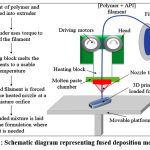 |
Figure 1: schematic diagram representing fused deposition modelling1 |
Techniques Involved in 3D Printing in Drug Delivery Systems
3D printing is revolutionizing the manufacturing of tailored drug delivery systems. The process consists of several critical steps. Initially, computer-aided design (CAD) software is adopted to make a 3D model of the drug dosage form or delivery system.Once the design is finalized, the selected 3D printing method is used to construct the object layer by layer, as per the CAD specifications. Following the printing process, additional steps like curing, drying, or coating may be needed to enhance the chemical and physical characteristics of the finished product. Quality control plays a vital role in ensuring uniform drug distribution and maintaining the structural integrity of the 3D-printed pharmaceuticals.These technologies provide a flexible solution for customizing drug delivery systems to meet the specific needs of individual patients, thereby improving treatment outcomes in medicine.9
Polymers Used in 3D Printing
In 3D printing, a broad selection of biocompatible polymers is utilized to achieve various pharmaceutical and medical objectives.These polymers are chosen for their compatibility with the drug or intended application, as well as their mechanical properties.10Some common polymers include Polyvinyl alcohol (PVA), appreciated for its solubility and use in fast-dissolving drug delivery systems; Polyethylene glycol (PEG), known for its excellent biocompatibility and versatility in drug formulation; Polylactic acid (PLA), a biodegradable polymer compatible with a variety of drugs; Polycaprolactone (PCL), offering durability and slow degradation, making it suitable for long-acting drug delivery systems; Hydroxypropyl methylcellulose (HPMC), a water-soluble polymer often employed in the creation of fast-dissolving dosage forms; and methacrylate-based resins, valued for their versatility and strength in diverse pharmaceutical applications. The choice of polymer in 3D printing plays an important role in determining the final properties and performance of the 3D-printed pharmaceutical and medical products.10
3D Printed Dosage Forms
3D printing technology has revolutionized the pharmaceutical industry, offering unprecedented customization and precision in drug delivery.For instance, 3D printing allows for the creation of personalized tablets and capsules, as seen in Aprecia Pharmaceuticals Spritam (levetiracetam) tablet, designed to dissolve rapidly in the mouth, benefiting patients with epilepsy.8 In the realm of oral films and strips, companies like FabRx have developed 3D-printed thin, flexible films that dissolve in the mouth, offering a more patient-friendly alternative to conventional tablets. Customized implants and tissue scaffolds, such as those produced by OssDsign, provide patient-specific cranial implants and bone regeneration scaffolds for a perfect fit and optimal tissue regeneration.9For more complex structures, 3D printing enables the production of microneedles for transdermal drug delivery and drug-eluting stents customized for precise drug delivery, exemplified in various medical device companies’ innovations. These examples illustrate how 3D printed dosage forms are transforming drug delivery, offering personalized solutions, and enhancing patient care across a spectrum of medical applications.9
Advantages of 3D Printing
3D printing boasts several key advantages, including exceptional customization capabilities for personalized medicine and patient-specific medical devices.Its ability to fabricate complex structures, enable rapid prototyping, and reduce material waste makes it cost-effective and sustainable.10The technology offers high precision and accuracy, fostering consistent, quality output. It supports on-demand, localized manufacturing and small batch production, cutting costs.In healthcare, 3D printing allows for precise drug delivery control and the development of innovative medical devices and tissue scaffold. It extends its benefits to space exploration and educational institutions, making it a transformative force in manufacturing and design.10
Disadvantages of 3D Printing
The limitations of 3D printing include a restricted range of available materials, complex and evolving regulatory challenges, a significant initial equipment cost, the need for meticulous quality control, concerns over intellectual property protection, post-processing requirements, a learning curve for operation and design, potential environmental impact, size and speed constraints, and limitations in achieving smooth surface finishes. These challenges underscore the need for careful consideration and adaptation when employing 3D printing in various applications.7
Applications of 3D Printing
3D printing, celebrated for its adaptability, is used in a several kinds of industries. In healthcare and medicine, it plays a vital role in the production of tailored implants, prosthetics, and surgical models.The aerospace industry leverages 3D printing for rapid prototyping and creating lightweight components. The automotive sector benefits from the ability to produce custom parts and streamline prototyping processes. In manufacturing, 3D printing is employed to create intricate, lightweight parts, jigs, fixtures, and molds.Within architecture and construction, it allows for the creation of architectural models and custom-building components, including entire 3D-printed structures.The educational sector utilizes 3D printing to create educational models, enhancing hands-on learning experiences.9In dentistry, it is used to produce dental models, crowns, bridges, and orthodontic devices.Furthermore, 3D printing finds applications in various fields such as art, design, food production, electronics, military, and environmental solutions, demonstrating its transformative impact across diverse industries.9
AI and Machine Learning
AI and Machine learning are revolutionizing medicine by allowing personalized treatments, accelerating drug discovery, aiding clinical decision-making, enhancing medical imaging analysis, and identifying genetic markers for targeted therapies. These technologies offer significant advantages in healthcare but come with challenges like data quality, regulatory compliance, and interpretability.Nevertheless, they continue to reshape the medical field, improving patient care and outcomes.11
Tools of AI
Artificial Intelligence (AI) employs several essential tools in the realm of emerging drug technology. Machine learning algorithms are fundamental for sifting through extensive datasets to identify potential drug candidates and predict drug-target interactions.Natural Language Processing (NLP) aids in extracting valuable information from scientific literature and clinical records, facilitating the identification of relevant research findings and drug targets.Cheminformatics combines chemistry and informatics to manage chemical data, supporting molecular design and compound screening.12Deep learning is instrumental in image analysis, particularly in understanding complex biological structures.Data mining tools uncover hidden patterns within extensive datasets, assisting in the identification of potential drug targets and therapeutic opportunities.Finally, simulation and modelling software enable the prediction of molecular interactions, expediting drug development.These tools collectively empower pharmaceutical research, expediting drug discovery and data-driven decision-making in the pursuit of innovative drugs and therapies.12
Methods of AI
Artificial Intelligence (AI) employs various methods in drug technology to revolutionize the process of drug discovery and development.Virtual screening is utilized to predict potential drug candidates through the computational analysis of chemical libraries. AI uses drug design based on structure to optimize drug compounds based on the three-dimensional structures of biological molecules.Cheminformatics manages and predicts chemical properties, aiding in compound identification and design.High-throughput screening automates the evaluation of numerous compounds, expediting the initial stages of drug discovery.AI-driven analysis of biological data, including genomics and proteomics, helps identify drug targets and biomarkers.
Molecular dynamics simulations model drug interactions at the atomic level.Deep learning is used to analyse complex biological data.These methods collectively enhance the efficiency of pharmaceutical research, reduce development timelines, and facilitate the discovery of novel drugs and therapies.13
Methods of Machine Learning
Machine learning in medicine encompasses several key approaches to leverage data for enhanced patient care, diagnosis, and research. Supervised learning, a foundational approach, trains models on labelled datasets, allowing for the prediction of specific outcomes, such as disease classification, patient risk assessment, and drug response prediction.Unsupervised learning, conversely, delves into unlabelled data, revealing hidden patterns and structures that assist in patient clustering, dimensionality reduction, and the identification of novel disease subtypes.13Deep learning, a subset of machine learning, employs complex neural networks with multiple layers and excels in tasks such as medical image analysis, natural language processing, and genomics research.13Reinforcement learning is focused on learning optimal sequences of actions, finding application in treatment planning, dose optimization, and personalized therapy recommendations.Transfer learning adapts pre-trained models to specific medical tasks, aiding in fields like medical image analysis.Semi-supervised learning combines labelled and unlabelled data, proving beneficial when labelled data is limited and utilized in tasks like medical image segmentation and diagnosis. These diverse machine learning approaches collectively contribute to improving healthcare by extracting valuable insights from complex medical data, ultimately enhancing patient care and advancing medical research.14
Advantages of AI and Machine Learning
AI and machine learning offer numerous advantages in medicine, including personalized treatment plans, efficient disease diagnosis, clinical decision support for healthcare professionals, accelerated drug discovery, genomics-based personalized medicine, predictive analytics for disease outbreaks, enhanced medical image interpretation, and operational efficiency in healthcare facilities. These technologies collectively enhance patient care, streamline medical processes, and advance medical research, making them great assets in the realm of medicine.15
Disadvantages of AI and Machine Learning
AI and machine learning, while beneficial in medicine, present challenges. They demand high-quality, unbiased data for accuracy and face regulatory complexities. The interpretability of deep learning models can be an issue, and initial implementation costs can be significant. Resistance to change and ethical concerns about biases are prevalent. AI is complementary to human expertise, not a replacement. Additionally, security risks related to patient data must be managed. Balancing these drawbacks is essential to harness the potential of AI and machine learning in healthcare responsibly and effectively.15
Applications of AI and Machine Learning
AI and machine learning have a profound impact on medicine, with diverse applications that improve patient care and advance medical research. They play a critical role in disease diagnosis by enhancing the accuracy of medical imaging interpretation and identifying specific biomarkers in genomic data.13 Personalized medicine benefits from AI’s ability to analyse patient data and tailor treatment plans, optimizing drug selection and dosages.16Healthcare professionals rely on AI-driven clinical decision support systems for evidence-based treatment recommendations. In drug discovery, these technologies expedite candidate identification, compound design, and the screening process.14Operational efficiency is boosted through AI in hospital management, patient scheduling, and inventory control.Predictive analytics assists in forecasting disease outbreaks, patient readmissions, and adverse events, allowing for proactive resourceallocation.Furthermore, AI is pivotal in telemedicine, remote patient monitoring, and drug repurposing, all contributing to the evolution of healthcare and medical research.15
Nano Technology
Nanotechnology is an actively advancing field that includes the manipulation and engineering of materials at the nanoscale, which generally ranges from 1 and 100 nanometres. It has found diverse applications, including drug delivery and medical imaging.16
Nano Particletypes
Nanoparticles come in various forms, each with unique characteristics suited to different applications.Liposomes, for instance, are small spherical vesicles with lipid bilayers that can encapsulate both hydrophobic and hydrophilic drugs.Micelles are another type of nanoparticle, typically formed by amphiphilic molecules, which can solubilize hydrophobic drugs in their core.17Quantum dots are semiconductor nanoparticles known for their remarkable fluorescent properties, making them useful in imaging and diagnostics.Polymeric nanoparticles are versatile and can be tailored for specific purposes, like controlled drug release. Dendrimers are large molecules; they consist of branches around an inner core in which the drug is loaded.17
Techniques of Nano Technology
Nanotechnology employs two primary methodologies: the top-down and bottom-up approaches.In the top-down approach, larger materials are reduced to the nanoscale through processes such as milling, etching, or lithography. This method allows for precision but may not be suitable for all materials.The bottom-up approach, on the other hand, involves assembling nanoparticles from atomic or molecular components.18 This approach is more versatile, as it enables the creation of custom-designed nanoparticles. Techniques like self-assembly and molecular beam epitaxy are used to build nanoparticles from the ground up.
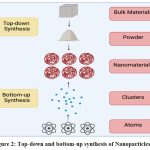 |
Figure 2: Top-down and bottom-up synthesis of Nanoparticles26 |
Nano Technology in Drug Delivery
Nanotechnology has revolutionized drug delivery.Nanoparticles function as drug carriers, improving drug solubility and bioavailability.They can target specific cells or tissues, delivering medication precisely where it’s needed, which reduces side effects and increases therapeutic efficacy.18Controlled drug release systems, created through nanotechnology, allow for sustained and predictable drug administration. Nanoparticles can also overcome biological barriers, like the blood-brain barrier, enabling the treatment of conditions that were previously difficult to reach.Moreover, nanotechnology allows for combination therapies, where multiple drugs can be delivered together for enhanced effectiveness.19
Nano Technology in Imaging
Nanotechnology is vital in the field of medical imaging, where it significantly enhances diagnostic capabilities.Nanoparticles, including quantum dots and superparamagnetic iron oxide nanoparticles, are used as contrast agents to improve the detection and visualization of pathological conditions.These particles are engineered to target specific tissues, thereby increasing imaging accuracy.20 For instance, in magnetic resonance imaging (MRI), superparamagnetic nanoparticles help enhance image contrast, which aids in the diagnosis of diseases. Nanotechnology allows for continuous tracking of drug distribution in the body, offering valuable perspectives for both research and patient care.
Advantages of Nano Technology
The advantages of nanotechnology in medicine are substantial. It enables precise drug delivery which minimize adverse effects and improving therapeutic outcomes. Targeted therapy means that healthy cells are spared from potential harm. Additionally, nanotechnology facilitates personalized medicine by customizing treatment based on one’s genetic or physiological characteristics.Combination therapies, regenerative medicine, and improved vaccine development are all made possible by nanotechnology.17
Disadvantages of Nano Technology
Nanotechnology is not without its challenges.Safety concerns about the possible toxicity of nanoparticles exist, and more research is needed to understand and mitigate these risks. Regulatory agencies are making proposals for the safe use of nanotechnology in healthcare. There are also environmental concerns, as the disposal of nanoparticles can impact ecosystems.Ensuring the ethical and responsible use of nanotechnology is essential.19
Applications of Nano Technology
Nanotechnology has a wide range of applications, not only in medicine but also in fields such aselectronics, energy, and materials science.In medicine, it is transforming drug delivery, diagnostics,and regenerative medicine. It is enhancing imaging technologies and facilitating targeted and personalized treatments, makingsignificant advancements inhealthcare possible.20 In electronics, nanotechnology is driving the development of smaller and more efficient devices, while in materials science, it’s contributing to the innovation of novel materials with uniqueproperties.In the energy sector, nanotechnology is aiding in the growth of more efficient solar cells and energy storage systems.20
Gene therapy
Gene therapy is a revolutionary medical approach that aims to treat or cure genetic disorders by introducing, removing, or altering genetic material within a patient’s cells.The process typically involves the delivery of therapeutic genes into a patient’s cells to correct a genetic defect or modulate their function, offering the potential for long-lasting or even permanent treatment.21
Steps Involved in Gene Therapy
Gene-therapy generally follows a sequence of steps, starting with identifying the specific genetic defect causing the disorder.The next step involves the selection and design of therapeutic genes, which can either replace the defective gene, supplement its function, or regulate it.22Once the therapeutic genes are ready, they are delivered to the patient’s cells, often with the use of viral vectors or non-viral methods.The therapy’s effects are then monitored, and any necessary adjustments are made to optimize treatment.This continuous assessment ensures the therapy’s safety and efficacy.22
Gene Therapy in Drug Delivery Systems
Gene therapy can be integrated into drug delivery systems,re therapeutic genes are encapsulated within nanoparticles, liposomes, or other carriers.These systems protect the genetic material, facilitate controlled release, and enhance target-specific delivery.
By combining gene therapy with drug delivery, it’s possible to create highly targeted and efficient treatments for various diseases, such as cancer, where genetic manipulation can enhance the sensitivity of cancer cells to specific drugs.22
Advantages of Gene Therapy
Gene therapy holds significant promise, as it offers the potential to address genetic disorders at their root cause.It can provide long-term or even permanent treatment solutions, reducing the need for lifelong medication.Gene therapies also have the potential to treat conditions with no existing cures.Additionally, it can be tailored to individual patients, promoting personalized medicine.22
Disadvantages of Gene Therapy
Challenges associated with gene therapy include safety concerns, potential unintended genetic alterations, and immune responses to viral vectors used for gene delivery.The development and regulation of gene therapies require stringent testing and oversight.Furthermore, gene therapy may be costly and is not without ethical considerations, particularly when applied to germline editing or enhancement rather than disease treatment.23
Applications of Gene Therapy
Gene therapy has shown tremendous potential in treatment of genetic disorders, inherited diseases, and certain types of cancer.23It is also being explored for its applications in regenerative medicine, where it can stimulate tissue repair and organ transplantation.In recent years, gene therapy has made strides in the treatment of illness including severe combined immunodeficiency (SCID) and inherited blindness disorders, indicating its potential to transform healthcare by offering novel treatments for previously incurable diseases.23
Crispr Technology
CRISPR (Clustered Regularly Interspaced Short Palindromic Repeats) is a groundbreaking gene-editing technology that enables exact changes to an organism’s DNA.Originally discovered as a natural defence mechanism in bacteria and archaea against viruses, CRISPR consists of two primary components: the Cas9 protein, which functions as molecular scissors, and a guide RNA (gRNA), which directs the Cas9 protein to the specific DNA sequence targeted for editing.The gRNA is designed to complement the target DNA sequence, and once Cas9 reaches the target, it creates a double-strand break in the DNA.The cell’s inherent repair processes then take over, either introducing the desired changes through non-homologous end joining (NHEJ) or facilitating accurate edits via homology-directed repair (HDR).24
CRISPR has transformed genetic research, enabling gene modifications with remarkable precision and ease.Its applications span medicine, agriculture, and biotechnology, empowering scientists to explore gene functions, develop therapies for genetic disorders, and improve crop resilience to pests and environmental stressors.24Despite its vast potential, CRISPR raises ethical and safety concerns, especially in human germline editing and the possibility of off-target effects, sparking ongoing discussions about its regulation and responsible use.25
Future Implications and Challenegs
3d Printing
Positive Implications
3D printing presents numerous positive implications.One significant advantage is customization, as it enables the development of personalized and tailored products, fostering improved designs and solutions.1Moreover, 3D printing is cost-efficient, minimizing material waste and enabling on-demand production, which can lead to economic benefits.The technology facilitates rapid prototyping, accelerating product development byproviding a quick and cost-effective means of creating prototypes.In the medical arena, 3D printing has transformed healthcare by allowing the manufacture of patient-specific implants, prosthetics and even organs, showcasing its potential for significant positive impact.1
Negative Implications
Downsides encompass quality control issues and limited materials may restrict the range of applications and strength of printed objects.7 The ease of replicating objects raises concerns about intellectual property and copyright infringement.The disposal of 3D printed waste and the energy-intensive printing process may have environmental consequences.1
Challenges
Overcoming regulatory approval hurdles and safeguarding intellectual property pose significant challenges in the field of 3D printing for drug manufacturing.10
Nanotechnology
Positive Implications
Nanotechnology offers a range of positive implications. In medicine, it facilitates targeted drug delivery, enhancing treatment efficacy and diminishing adverse effects.The engineering of materials at the nanoscale often results in enhanced properties, leading to the development of stronger products.Energy efficiency benefits from the use of nanomaterials, which can enhance the performance of energy storage and conversion devices.Furthermore, nanotechnology contributes to advancements in electronics, enabling the creation of smaller and more efficient electronic components.19
Negative Implications
Concerns about the potential toxicity of certain nanoparticles raise questions about health and safety.Regulatory challenges persist due to the lack of standardized regulations for nanotechnology applications, posing difficulties in ensuring the safety of these technologies.11Ethical debates also surround the use of nanotechnology in areas such as human enhancement and privacy.16
Challenges
Ensuring nanomaterial safety and establishing effective regulatory oversight represent key challenges associated with nanomedicine.17
AI (Artificial Intelligence)
Positive Implications
Artificial Intelligence (AI) holds numerous positive implications for various industries. One of its major advantages is automation, which streamlines repetitive tasks, leading to increased efficiency and productivity.In healthcare, AI aids in medical diagnosis, drug discovery, and the development of personalized treatment plans.AI drives innovation across fields like robotics, natural language processing, and computer vision, contributing to technological advancements.Smart technologies, such as autonomous vehicles and smart homes, are made possible by the capabilities of AI.13
Negative Implications
Risks include data bias and regulatory complexities due to rapid technological advancements.Job displacement is a concern as automation may lead to the elimination of certain jobs.Issues of bias and fairness arise, as AI algorithms may perpetuate biases present in the data used for training, resulting in unfair outcomes.19Privacy challenges arise due to the massive collection and use of personal data for AI applications.Additionally, there are security risks associated with the potential misuse of AI for malicious purposes, including the creation of deepfake content and cyber-attacks.13
Challenges
Navigating issues related to data privacy, addressing algorithmic bias, and formulating comprehensive healthcare AI regulations are ongoing challenges.14
Gene Therapy
Positive Implications
Gene therapy offers promising positive implications, particularly in the realm of medical treatment. It holds the ability to treat genetic disorders by fixing or replacing defective genes, providing hope for those with hereditary conditions.In the field of oncology, gene therapy opens new avenues for targeted cancer treatments by modifying or replacing cancerous cells.Moreover, gene therapy can be applied as a preventive measure, addressing genetic predispositions to diseases before they manifest.22
Negative Implications
Ethical dilemmas, disparities in access, and unforeseen consequences are linked to genetic editing.23Manipulating the human genome raises ethical questions about the boundaries of intervention, touching on fundamental aspects of human identity and nature.24The long-term effects of gene therapy, including unintended genetic changes, are not fully understood and require thorough investigation.Safety concerns exist, encompassing potential risks and side effects such as immune responses and off-target genetic alterations. Additionally, issues of access and affordability may limit the widespread application of gene therapies, leading to disparities in healthcare access.25
Challenges
Ensuring safety, tackling the high costs of treatment, and addressing ethical concerns are significant challenges associated with gene therapy.23
Discussion
This detailed analysis explores the potential impacts, advantages, and challenges associated with emerging drug technologies, including 3D printing, artificial intelligence (AI), nanotechnology, gene therapy, and CRISPR technology.
Personalized Medicine and Improved Patient Care
A key highlight of this article is the promise of personalized medicine. By utilizing 3D printing to create customized drug dosage forms, patient adherence can be enhanced while minimizing adverse effects. Additionally, AI-powered drug discovery can tailor treatment options based on an individual’s specific genetic and physiological characteristics. This level of personalization not only promises better treatment outcomes but also boosts patient satisfaction and engagement. The article underscores the revolutionary potential of these new technologies in putting the patient at the centre of healthcare.
Addressing Drug Discovery Challenges
The article illustrates how AI and machine learning are revolutionizing the drug discovery process. These technologies enable the automation of attribute extraction and the optimization of molecular designs, which accelerates the creation of new pharmaceutical compounds. This transformation has vast implications, including tackling antimicrobial resistance and developing more effective treatments for various diseases. However, the growing reliance on AI also raises important issues, such as the quality of data, privacy concerns, and the necessity for continuous validation and refinement of algorithms.
Precision in Drug Delivery
Nanotechnology and 3D printing are pivotal in advancing drug delivery methods. The ability to precisely target specific cells or tissues and tailor drug release profiles marks a significant breakthrough. This precision not only reduces side effects but also enhances the therapeutic efficacy of treatments. The article highlights the immense potential of these technologies in improving patient outcomes. However, it also stresses the need to address safety concerns, standardize practices in nanomedicine, and navigate the complexities of regulatory approvals for 3D printing.
Ethical Considerations and Responsible Innovation
The rapid advancements in gene therapy and CRISPR technology have sparked important ethical and safety concerns. While these innovations offer the potential to cure genetic disorders, they come with challenges such as disparities in access, high costs, and ethical questions surrounding genetic modification. The article appropriately stresses that responsible progress in these areas requires solid ethical frameworks, rigorous regulatory oversight, and an unwavering commitment to patient safety.
Conclusion
In conclusion, “Exploring the Future of Medicine: A Comprehensive Review of Emerging Drug Technologies” sheds light on the transformative potential of emerging drug technologies like 3D printing, artificial intelligence, nanotechnology, gene therapy, and CRISPR. These innovations have the power to personalize medicine, expedite drug discovery, and enhance precision in drug delivery. However, ethical considerations, safety concerns, and robust regulatory oversight are essential as we navigate this promising yet complex future of medicine, ensuring responsible innovation while striving to improve patient care and outcomes.
Acknowledgement
It is an expression of gratification and pride to look back with contentment on the long-travelled journey, to be able to recapture some of the fine moments, to be able to thank infinite number of individuals, some who were with us from the start, some who joined us at some point along the way, whose kindness, love and blessing has brought this day, we wish to thank each one of them with all our hearts. We would like to express our gratitude to our Principal Dr. Y.Srinivasa Rao Garu, and Chairman Dr. L. Ravu Rathaiah Garu for their supervision, advice and guidance.
Funding Sources
The author(s) received no financial support for the research, authorship, and/or publication of this article.
Conflict of Interest
The authors do not have any conflict of interest.
Data Availability Statement
This statement does not apply to this article.
Ethics Statement
This research did not involve human participants, animal subjects, or any material that requires ethical approval.
Informed Consent Statement
This study did not involve human participants, and therefore, informed consent was not required.
Clinical Trial Registration
This research does not involve any clinical trials.
Permission to reproduce material from other sources
Not Applicable
Author Contributions
Galanki Vasantha : Conceptualization, Supervision, Methodology, Writing- Review & Editing.
Singuluri Jashnavi Naga Sravya: Writing – Original Draft, Data Collection, Analysis
Bollipalli Sanath: Analysis and Data Collection,
References
- Jacob S, Nair AB, Patel V, Shah J. 3D printing technologies: recent development and emerging applications in various drug delivery systems. AAPS PharmSciTech. 2020 Aug;21:1-6.
CrossRef - Wadher K, Trivedi R, Wankhede N, Kale M, Umekar M. 3D printing in pharmaceuticals: An emerging technology full of challenges. Annales PharmaceutiquesFrançaises 2021 Mar 1 (Vol. 79, No. 2, pp. 107-118). Elsevier Masson.
CrossRef - Valenti MT, Serena M, Dalle Carbonare L, Zipeto D. CRISPR/Cas system: An emerging technology in stem cell research. World journal of stem cells. 2019 Nov 26;11(11):937.
CrossRef - Sahoo SK, Labhasetwar V. Nanotech approaches to drug delivery and imaging. Drug discovery today. 2003 Dec 15;8(24):1112-20.
CrossRef - Orive G, Hernandez RM, Gascón AR, Domı́nguez-Gil A, Pedraz JL. Drug delivery in biotechnology: present and future. Current opinion in biotechnology. 2003 Dec 1;14(6):659-64.
CrossRef - Sri SA, Chaitanya RK, Malathi Y, Madhavi KM, Nikitha BS, Raga LM. Role of 3D printing catching up with expectations in paediatric dentistry. 3D printing in dentistry. Acta Bioclínica. 2022;12(23):207-50.
- Singhvi G, Patil S, Girdhar V, Chellappan DK, Gupta G, Dua K. 3D-printing: an emerging and a revolutionary technology in pharmaceuticals. Panminerva Medica. 2018 Dec 1.
CrossRef - Wang J, Zhang Y, Aghda NH, Pillai AR, Thakkar R, Nokhodchi A, Maniruzzaman M. Emerging 3D printing technologies for drug delivery devices: Current status and future perspective. Advanced drug delivery reviews. 2021 Jul 1;174:294-316.
CrossRef - Beg S, Almalki WH, Malik A, Farhan M, Aatif M, Rahman Z, Alruwaili NK, Alrobaian M, Tarique M, Rahman M. 3D printing for drug delivery and biomedical applications. Drug Discovery Today. 2020 Sep 1;25(9):1668-81.
CrossRef - Trenfield SJ, Awad A, Madla CM, Hatton GB, Firth J, Goyanes A, Gaisford S, Basit AW. Shaping the future: recent advances of 3D printing in drug delivery and healthcare. Expert opinion on drug delivery. 2019 Oct 3;16(10):1081-94.
CrossRef - Patel UK, Anwar A, Saleem S, Malik P, Rasul B, Patel K, Yao R, Seshadri A, Yousufuddin M, Arumaithurai K. Artificial intelligence as an emerging technology in the current care of neurological disorders. Journal of neurology. 2021 May;268(5):1623-42.
CrossRef - Mohanty S, Rashid MH, Mridul M, Mohanty C, Swayamsiddha S. Application of Artificial Intelligence in COVID-19 drug repurposing. Diabetes & Metabolic Syndrome: Clinical Research & Reviews. 2020 Sep 1;14(5):1027-31.
CrossRef - Akay A, Hess H. Deep learning: current and emerging applications in medicine and technology. IEEE journal of biomedical and health informatics. 2019 Jan 23;23(3):906-20.
CrossRef - Patel L, Shukla T, Huang X, Ussery DW, Wang S. Machine learning methods in drug discovery. Molecules. 2020 Nov 12;25(22):5277.
CrossRef - Gupta R, Srivastava D, Sahu M, Tiwari S, Ambasta RK, Kumar P. Artificial intelligence to deep learning: machine intelligence approach for drug discovery. Molecular diversity. 2021 Aug;25(3):1315-60.
CrossRef - Chakraborty M, Jain S, Rani V. Nanotechnology: emerging tool for diagnostics and therapeutics. Applied biochemistry and biotechnology. 2011 Nov;165(5):1178-87.
CrossRef - Sahu T, Ratre YK, Chauhan S, Bhaskar LV, Nair MP, Verma HK. Nanotechnology based drug delivery system: Current strategies and emerging therapeutic potential for medical science. Journal of Drug Delivery Science and Technology. 2021 Jun 1;63:102487.
CrossRef - Chintagunta AD, M SK, Nalluru S, NS SK. Nanotechnology: An emerging approach to combat COVID-19. Emergent materials. 2021 Feb;4(1):119-30.
CrossRef - Emeje MO, Obidike IC, Akpabio EI, Ofoefule SI. Nanotechnology in drug delivery. Recent advances in novel drug carrier systems. 2012 Oct 31;1(4):69-106.
- Farokhzad OC, Langer R. Impact of nanotechnology on drug delivery. ACS nano. 2009 Jan 27;3(1):16-20.
CrossRef - Gruntman AM, Flotte TR. The rapidly evolving state of gene therapy. The FASEB Journal. 2018 Apr;32(4):1733-40.
CrossRef - Pan X, Veroniaina H, Su N, Sha K, Jiang F, Wu Z, Qi X. Applications and developments of gene therapy drug delivery systems for genetic diseases. Asian journal of pharmaceutical sciences. 2021 Nov 1;16(6):687-703.
CrossRef - Dunbar CE, High KA, Joung JK, Kohn DB, Ozawa K, Sadelain M. Gene therapy comes of age. Science. 2018 Jan 12;359(6372):eaan4672.
CrossRef - Fellmann C, Gowen BG, Lin PC, Doudna JA, Corn JE. Cornerstones of CRISPR–Cas in drug discovery and therapy. Nature reviews Drug discovery. 2017 Feb;16(2):89-100.
CrossRef - Barrangou R, Doudna JA. Applications of CRISPR technologies in research and beyond. Nature biotechnology. 2016 Sep;34(9):933-41.
CrossRef - Huston M, DeBella M, DiBella M, Gupta A. Green synthesis of nanomaterials. Nanomaterials. 2021 Aug 21;11(8):2130.
CrossRef

This work is licensed under a Creative Commons Attribution 4.0 International License.