

Manuscript accepted on : 16-05-2025
Published online on: 09-06-2025
Plagiarism Check: Yes
Reviewed by: Dr. Ana Golez
Second Review by: Dr. Hiren B. Soni
Final Approval by: Dr. Wagih Ghannam
Seaweed-Derived Bioactives in Cosmetics: A Detailed Review on Skin Health Benefits
Gayathri Sivakumar and Sivasubramani Kandasamy*
Department of Microbiology, Faculty of Science, Annamalai University, Chidambaram, Tamil Nadu, India.
Corresponding Author E-mail:drksivasubramani@gmail.com
DOI : http://dx.doi.org/10.13005/bbra/3376

ABSTRACT: Cosmetics, integral to personal care, have faced scrutiny due to the potential health hazards posed by synthetic ingredients. This review explores the diverse applications of seaweed-derived bioactive compounds in cosmetic science, presenting a comprehensive examination of their impact on skin health. The rising concerns about the adverse effects of synthetic cosmetics, including carcinogenic properties, have propelled the search for natural and sustainable alternatives. Seaweeds, as macroscopic algae, offer a rich source of bioactive molecules such as fucoidans, alginates, carrageenans, mycosporine-like amino acids (MAA), and more. These compounds exhibit multifaceted functionalities, including antioxidant, anti-inflammatory, anti-aging, antimicrobial, UV protection, and skin-whitening effects. The review delves into extraction methods, processing techniques, and formulation strategies, emphasizing the potential of nanosystems to enhance stability and efficacy. Challenges, including heavy metal accumulation, are discussed, underscoring the importance of rigorous chemical analysis for safety in cosmetic applications. The review concludes by highlighting future directions, including optimizing extraction processes, increasing bioactive molecule production, and conducting more clinical studies to ensure product safety and quality. In essence, seaweed-derived bioactive compounds present a promising avenue for the development of natural and effective cosmetic formulations with diverse skincare benefits.
KEYWORDS: Anti-Aging; Anti-Inflammatory; Bio-actives; Cosmetic Science; Seaweed; Skincare
Download this article as:
| Copy the following to cite this article: Sivakumar G, Kandasamy S. Seaweed-Derived Bioactives in Cosmetics: A Detailed Review on Skin Health Benefits. Biotech Res Asia 2025;22(2). |
| Copy the following to cite this URL: Sivakumar G, Kandasamy S. Seaweed-Derived Bioactives in Cosmetics: A Detailed Review on Skin Health Benefits. Biotech Res Asia 2025;22(2). Available from: https://bit.ly/4krCCZg |
Introduction
Any product that is meant to be put, rubbed, sprinkled, sprayed, or applied on the human body or any part of it can be classified as cosmetic.1 The use of synthetic products has been banned because of their carcinogenic properties by the Food and Drug supervisory committee.2 According to 3, the most pervasive chemicals presented in cosmetics are in the form of preservatives, for example, paraben and sodium benzoate, also fragrances like limolene. Prolonged use of these chemicals has negative consequences on people’s health and well-being. 3 According to the USFDA’s tests in 2009 and 2011, several popular lipstick products contained lead (Pb) concentrations that exceeded the limit for safe cosmetics.4 (Campaign for Safe Cosmetics 2007) Synthetic UV filters used in sunscreens can cause bioaccumulation in several species and also they cause bleaching of coral, and hydrogen peroxide production in fishes thus harming marine life. This led Hawaii to prohibit certain sunscreens, including oxybenzone. Following suit, the Western Pacific nation of Palau, along with Key West, Florida, and the US Virgin Islands, also implemented similar bans.5 Additionally, heavy metals are sometimes used as coloring agents or preservatives in cosmetics; however, they are toxic and can negatively impact the nervous system, kidneys, and other organs. 1 Due to the negative and harmful impacts of chemicals in cosmetics , and their environmental damages,4 there is a growing interest in natural and sustainable ingredients in cosmetics. People go in search of safe and natural ingredients to avoid side effects.6
Macroscopic algae, commonly known as seaweeds, play a crucial role in marine ecosystems. They typically thrive in shallow coastal waters and require a substratum to grow and develop. They lack true roots, leaves and stems. 7 Marine algae, categorized as red, brown, and green algae, have potential bioactive compounds with a wide range of applications, especially in skincare products.6.Brown, red, and green macroalgae contribute approximately 59%, 40%, and less than 1%, respectively, to the total global macroalgae cultivation.8
Recent discussions have highlighted the incorporation of algal substances in cosmeceuticals, focusing on their potential benefits for anti-aging, skin whitening, and skin cancer prevention. 9
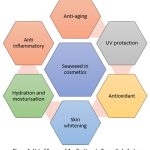 |
Figure 1 : List of Seaweed Applications in Cosmetic Industry
|
Bioactive compounds obtained from marine algae, including phenolic compounds, polysaccharides, pigments, PUFAs, sterols, proteins, peptides, and mycosporine-like amino acids (MAAs), possess diverse biological activities, making them valuable active ingredients in cosmetic formulations.6 This review comprises the use of seaweed-derived bioactive molecules in cosmetics and their novel formulation methods to increase their stability and efficacy.
Types of seaweed Bioactive compounds
Seaweeds generate a range of compounds through primary metabolism, known as primary metabolites, crucial for their growth, survival, and proliferation. These primary metabolites fall into various classes, including lipids, proteins, and carbohydrates. Beyond primary metabolites, algae also amass essential minerals vital for seaweed life, enhancing both its nutritional and pharmacological significance.10 In the realm of seaweed components, a diverse array of substances showcases remarkable properties in antiaging and antioxidant effects. Sulphated polysaccharides, peptides, carotenoids, fatty acids, and phytohormones stand out for their beneficial impacts on skin health. Additionally, mycosporine-like amino acids and flavonoids are noted for their antiphotoaging activity. Specifically, flavonoids, including phlorotannins, act as lipolytic agents derived from macroalgae, concurrently exhibiting inhibitory effects on melanogenesis, contributing to their multifaceted role in skin care.11 Polysaccharides play a crucial role in various industrial applications, with sulfated types like fucoindans, carrageenans, and ulvan, as well as non-sulfated ones like alginates and agars, being the most widely recognized. Although certain polysaccharides like laminarin, xylans, porphyrans, argassan, and floridean are less abundant and not yet widely utilized in industry, ongoing research is exploring their potential applications for future use.10. Agar, a seaweed-derived ingredient, plays a vital role in numerous cosmetic products. Widely utilized as an emulsifier and stabilizer, agar ensures the consistent quality of creams. Its ability to control moisture content enhances the effectiveness of products such as hand lotions, deodorants, foundation, exfoliants, cleansers, and more. From shaving creams to anti-aging treatments, agar contributes to the stability and texture of formulations. Its versatility extends across various skincare and beauty items, highlighting its crucial role in the cosmetic industry.12
Table 1 : List of Seaweed and its Bioactive Compounds
|
S.no |
Seaweed |
Type of seaweed |
Bioactive compounds |
Functions |
|
1. |
Gracilaria cornea |
Red algae |
MAA |
UV protector 13 |
|
2. |
Porphyra columbina |
Red algae |
MAA |
UV protector17 |
|
3. |
Bostrychia radicans |
Red algae |
MAA |
UV protector21 |
|
4. |
Sargassum plagyophyllum |
Brown algae |
Phlorotannins , phloroglucinol |
Antioxidant activity28 |
|
5. |
Ecklonia maxima
|
Brown algae |
Sulfated polysaccharides |
Antioxidant activity36 |
|
6. |
Padina boryana
|
Brown algae |
Sulphated polysaccharides |
Antioxidant activity19 |
|
7. |
Sargassum siliquosum |
Brown algae |
Polyphenols |
Tyrosinase inhibitory activity2 |
|
8. |
Fucus spiralis
|
Brown algae |
Phlorotannins |
Antioxidant, anti-collagenase activity13 |
|
9. |
Kjellmaniella crassifolia |
Brown algae |
Fucoidan |
Anti-aging24 |
|
10. |
Sargassum hemiphyllum |
Brown algae |
Low molecular weight fucoidan |
Anti-inflammatory activity32 |
Extraction methods and Processing techniques
There are different kinds of extraction methods depending upon the target compounds. Red algae extraction traditionally relies on energy-intensive HAE. 14 proposed HPAE as a greener, more efficient alternative. Employing pressure, HPAE achieves higher yields and lower extraction times compared to HAE, all at lower temperatures. This environmental advantage, coupled with its potential for green solvents, makes HPAE a compelling paradigm shift in red algae extraction, unlocking its bioactive potential sustainably. Advanced techniques such as Supercritical Fluid Extraction, Subcritical Water Extraction, Ultrasound-Assisted Extraction, and Microwave-Assisted Extraction are preferred over conventional methods due to their enhanced efficiency, selectivity, and sustainability.15 The conventional extraction method proved superior in phenolic and phlorotannin content, ultrasound-assisted extraction enhanced anti-elastase activity.16 Optimizing process parameters for each method is essential for obtaining extracts with the targeted bioactive compounds. 15
Antioxidant and Radical Scavenging activity
The industries are moving towards natural antioxidants to replace synthetic antioxidants.17 Several authors analyzed the potential antioxidant activity of MAAs in vitro. In a study by Chen et.al.,18, an efficient degradation method for Sargassum fusiforme polysaccharides (PSF) using ascorbic acid and H2O2 was optimized. Under optimal conditions, degraded polysaccharides (DPSF) exhibited a DPPH radical scavenging rate of 75.22%. Notably, DPSF displayed superior antioxidant activities and tyrosinase inhibition compared to the original polysaccharide, indicating its potential for enhanced functionality.. It also has been proved that Ecklonia maxima exhibit promising potential in mitigating oxidative stress, diminishing melanogenesis, and thwarting photodamage in both invitro and invivo. 19
The study by Wang et al., found that SF-F4 was effective in increasing the viability of PM-treated HaCaT cells by inhibiting apoptosis and scavenging intracellular ROS.20 Additionally, In another study, PBP (Padina boryana ethanol precipitate) extracted from the marine brown alga Padina boryana was evaluated as a potent natural antioxidant. The research delved into the chemical composition of PBP, emphasizing the contributions of sulfate content, fucose, and galactose to its bioactive properties. The study highlighted PBP’s exceptional potential in safeguarding against ROS-induced cell damage and mitigating oxidative stress in zebrafish. Notably, the upregulation of Nrf2 and subsequent elevation of CAT and SOD protein levels shed light on the underlying mechanisms of PBP’s antioxidative effect.21 A study by Kang et al. 22 examined the antioxidant and whitening activities of a fermented extract comprising Undaria pinnatifida, Saccharina japonica, and Gloiopeltis furcate. The physiological effects of combined seaweed extracts were analyzed using Lactobacillus sakei strains derived from kimchi as lactic acid bacteria. Notably, the antioxidant potential, assessed through DPPH and ABTS radical scavenging assays, demonstrated that the inhibitory effects of the combined seaweed extracts surpassed those of the positive control, indicating enhanced antioxidant activity.22 Thus seaweed extracts can be used as an anti-oxidant in cosmetics.
Collagenase inhibition and Anti-Aging benefits
Seaweed extracts present a compelling avenue in the pursuit of natural anti-aging strategies. Polysaccharides, particularly fucoidans and their sulfated brethren, exhibit remarkable activity in dampening collagenase and elastase activity, thereby protecting the intricate tapestry of the skin matrix and mitigating wrinkle formation 6. This protective shield extends beyond polysaccharides, as recent investigations by 16 revealed a treasure trove of novel anti-aging metabolites within the enigmatic Sargassum horridum. Notably, Diosgenin, a steroidal saponin, alongside a quartet of previously unreported phenolic compounds, collectively address skin elasticity loss and photoaging triggered by reactive oxygen species, paving the way for the development of cutting-edge, seaweed-based anti-aging formulations.
Skin whitening
Many people in Asia desire a fair and flawless complexion and often seek skin whitening treatments to achieve it. In the process of melanin synthesis, tyrosinase is a crucial enzyme that plays two significant reactions. First, it hydroxylates l-tyrosine to 3,4-dihydroxy-l-phenylalanine, which further gets oxidized to dopaquinone. Then, dopaquinone is further converted to melanin. Sun exposure can increase the synthesis of both tyrosinase and melanosomes, which can lead to an increase in melanin production, resulting in darker skin.23 A study demonstrated that Sulfated polysaccharides from Celluclast-assisted extract of Hizikia fusiforme (HFPS) displayed anti-melanogenic effects by down-regulating tyrosinase and TRP-1 and -2, thereby inhibiting melanin synthesis. These findings suggest the potential of HFPS in both pharmaceutical and cosmeceutical industries for skin whitening.24 . An in vitro study evaluating tyrosinase inhibition demonstrated that S. siliquosum exhibits superior inhibitory activity, boasting an IC50 value of 65.0 μg GAE ml−1. This surpasses the efficacy of the well-known skin-lightening ingredient kojic acid, which recorded an IC50 value of 109.32 μg GAE ml−1. These findings highlight the potential of S. siliquosum as a promising candidate for skin-lightening applications, potentially outperforming established compounds in terms of tyrosinase inhibition.25 Another study aimed to investigate the anti-melanogenesis effect of Sargassum polycystum extracts by conducting various assays using B16F10 murine melanoma cells. SPHF inhibited melanogenesis by inhibiting cellular tyrosinase activity and may be useful for treating hyperpigmentation.26
Hydration and Moisturization
Moisturizer agents help to maintain skin appearance and elasticity, improving its barrier role against harmful environmental factor.27 Seaweeds, known for their rich amino acid content, including arginine, and a plethora of vitamins (A, B, C, D, and E), offer notable moisturizing benefits for the skin, contributing to its elasticity and acting as a barrier against environmental factors.28 Polysaccharides like alginate, agar, carrageenan, and fucoidans derived from specific algal species play a crucial role in regulating water distribution in the skin,28 with studies demonstrating impressive moisturizing rates, particularly in marine green algae such as Enteromorpha prolifera and Enteromorpha linza.29 Fucose, present in glycoproteins, not only provides moisturization but also exhibits anti-aging effects 30. Seaweed polysaccharides, such as those extracted from Saccharina japonica, have been found to surpass hyaluronic acid in moisturizing properties, suggesting their potential as valuable cosmetic ingredients 31. The lipid composition of seaweeds, including polyunsaturated fatty acids (PUFA) like γ-linolenic acid, arachidonic acid, eicosapentaenoic acid, and docosahexaenoic acid, along with sterols and phospholipids, enhances the skin barrier, offering protection.32 Agarobiose , a seaweed-derived component, serves as a moisturizer for both skin and hair, highlighting the multifaceted benefits of seaweed-based ingredients in skincare formulations. 33
Acne aggravation, eczema, physical texture arise if the skin is not properly moisturized28 Seaweed fulvescens (SF) is a green alga rich in chlorophyll . Treatment at 200 mg/mouse demonstrated inhibitory effects on AD ( Atopic dermatitis) symptoms, leading to improved dorsal skin conditions, reduced inflammation, smaller lymph nodes, and lower levels of proinflammatory cytokines. In HaCaT keratinocytes, SF (10, 25, and 50 μg/mL) dose-dependently suppressed the production of proinflammatory cytokines and reduced the phosphorylation of signal transducer and activator of transcription . These findings highlight the potential therapeutic benefits of SF in the treatment of Atopic deramatitis positioning it as a promising alternative.34 In a groundbreaking study investigating the modulation of reactive skin microbiota, the positive impact of Halymenia durvillei (HD), an active ingredient rich in polysaccharides, was evident over a concise 28-day period in 30 volunteers with reactive, sensitive skin. Notably, the analysis of skin microbiota showcased a predominance of beneficial Actinobacteria, Proteobacteria, Firmicutes, and Bacteroidetes, with no adverse changes observed post-HD treatment. The study underscored the remarkable maintenance of microbial communities in reactive skin, emphasizing the potential benefits of HD for promoting skin health. Additionally, clinical improvements aligned with a decrease in Corynebacterium kroppenstedtii, a marker associated with redness. Furthermore, an ex vivo assessment revealed the rapid and significant reduction in neuroinflammation parameters after just 6 days of HD extract application. These encouraging results highlight the promising role of HD polysaccharides in managing and enhancing the well-being of reactive and sensitive skin, shedding light on their positive impact on skin microbiota and neuroinflammation.35
Anti-Microbial Effects
The antimicrobial properties of seaweeds have been known since ancient times and well-documented in recent years and thus they are of interest for potential use in cosmetic products. 36. In a study conducted by 37 F2 and F7 fractions of Fucus spiralis exhibited the highest inhibition against C. acnes and M. furfur, respectively, leading to approximately 50–60% reduction in the growth of these microorganisms. Incorporating Sargassum polycystum ethanol extract as a natural preservative in sunscreen offers a compelling alternative to synthetic counterparts. Comparative studies reveal its antimicrobial efficacy, matching methylparaben’s 8-week preservation. The formulated cream demonstrates stability up to one year, balanced pH, absence of foul odor, an IC50 antioxidant activity of 105.42, and an SPF value of 2.00. These results highlight the potential of S. polycystum in cosmetics, aligning with the demand for effective, natural, and sustainable skincare solutions.38
Sargassum vulgare alginate, extracted post-ethanol pretreatment, showed superior antimicrobial efficacy compared to herbal preservative 705. Notably effective against Pseudomonas aeruginosa and Staphylococcus aureus within a shorter timeframe, suggesting its potential for cosmetics applications.39
UV Protection and Photoprotection
Mycosporine like aminoacids are compounds that has UV-absorbing properties to protect from UV induced damage. MAAs are small, water-soluble compounds with a molecular weight typically below 400 Da. These colorless molecules exhibit high stability under various environmental conditions. Structurally, they consist of either an aminocyclohexenone or aminocyclohexenimine ring, featuring nitrogen-containing substituents.5 MAA are water soluble and their absorption maxima is between 265nm and 362nm. These molecules are excellent UV-absorbing compounds with low toxicity, especially high stability and good antioxidant activity.40 Their concentration fluctuates throughout the year due to the effect of insolation.
Conventional sunscreens which use organic or inorganic UV filters has the capability to produce ROS on the skin .But MAA when used as UV filters in sunscreen has antioxidant properties which can retaliate the ros accumulation caused by the conventional UV filters. Porphyra-334 isolated from Porphyra yezoensis showed a protective effect on human skin fibroblasts exposed to UV-A radiation, increasing cell viability up to 88%. It also inhibited the accumulation of ROS in human skin fibroblasts damaged by UVA-induced oxidant stress in a dose-dependent manner, with similar results seen at 40 µM. 40 PBP demonstrated significant photoprotective effects in an anti-photodamage test, showcasing its ability to protect skin cells from UVB-induced damage. Specifically, PBP inhibited apoptosis and reduced intracellular reactive oxygen species levels in human epidermal keratinocytes (HaCaT cells) following UVB irradiation. The reduction in reactive oxygen species levels was dose-dependent, with 25 μg/mL, 50 μg/mL, and 100 μg/mL of PBP showing varying degrees of efficacy. Additionally, PBP exhibited notable protective actions on human dermal fibroblasts, including the suppression of oxidative damage, inhibition of collagen degradation, and attenuation of inflammatory responses. These findings highlight PBP as a promising candidate for photoprotective applications in skincare formulations.19
Anti-inflammatory Effects on skin
A recent study by Wang et al., 20 aimed to investigate the potential of SF-F4, a fucoidan extracted from S. fusiforme, to prevent skin damage caused by Particulate matter (PM) exposure. The study revealed that SF-F4 effectively enhanced the viability of PM-treated HaCaT cells by preventing apoptosis and reducing intracellular ROS levels. Furthermore, SF-F4 regulated the expression of MMPs and pro-inflammatory molecules in PM-stimulated HDF cells, leading to an increase in pro-collagen content. These findings suggest that SF-F4 has significant potential in preventing skin damage caused by PM exposure and can be a valuable ingredient in pharmaceutical and cosmetic products. 20 In another study by Shih et.al 41, researchers explored the potential of low-molecular-weight fucoidan (LMF) as a supplement for treating atopic dermatitis . (AD) LMF was prepared from Sargassum hemiphyllum which is known for its anti-inflammatory properties. The results revealed that the group supplemented with LMF experienced significant relief in AD symptoms. Notably, the frequency of using steroid ointments and oral antihistamines decreased in the LMF group, suggesting reduced inflammation.41 Additionally, Wang et al. 27 investigated the antioxidant and anti-wrinkle effects of sulfated polysaccharides from Celluclast-assisted extract of Hizikia fusiforme . (HFPS) Their findings suggested that HFPS could be a promising candidate for cosmeceutical applications due to its significant anti-inflammatory effects, including the inhibition of nitric oxide generation, reduction of pro-inflammatory cytokines, and suppression of iNOS and COX-2 expression in stimulated macrophages.27
Formulation Strategies in Cosmetic Science
Seaweed components have been effectively incorporated into various physical forms and are commercially available in products such as soaps, shampoos, sprays, hydrogels, and creams.42 Their effectiveness and stability can be enhanced using appropriate carrier systems or vesicles, such as liposomes, nano/microparticles, emulsions, and hydrogels, which are designed to deliver active agents in commercial formulations for improved performance.43
Nanosystems have been used to encapsulate the seaweed bioactive molecules thereby enhancing the stability and efficacy of the cosmetic formualtions . Nanosystems can help in sustained release of the product , permanence on the skin for a long time , minimizing the active ingredient hence avoiding the toxic effects caused by higher concentrations.43 . Hu et al.44 developed a straightforward approach to fabricate hydrophilic-hydrophobic core-shell microparticles utilizing seaweed-derived polymers. These microparticles hold promise for applications in safeguarding unstable compounds and enabling the controlled release of drugs or bioactive ingredients in cosmetic formulations Seaweed polymers provide significant advantages in terms of biocompatibility and biodegradability.39
Challenges and Future Directions
Consumers often lack awareness that natural-based cosmetic products comprise a intricate blend of both natural raw materials and chemical compounds, potentially leading to adverse effects on human health 45 . Utilizing algae as a cosmeceutical ingredient presents certain challenges, including concerns related to (i) biomass culturing techniques, (ii) metabolite extraction methods, and (iii) ensuring quality assurance and compliance with regulations . 45 Seaweeds have a tendency to accumulate heavy metals like cadmium (Cd), coper (Cu), manganese (Mn), niquel (Ni), lead (Pb), zinc (Zn), mercury (Hg) from water. So, the applications of seaweed in cosmetics should be accompanied by chemical analysis to evaluate the safety of the raw materials. 30
Conclusion
An interest on natural products is increasing in cosmetic industry. In that sense, seaweed is a natural source of many bioactive molecules like fucoidans , alginates , careeganan , MAA which are a great replacement for conventional or chemical active ingredients used in the formulations. Along with functional bioactives ,seaweed lipids and polysaccharides can also be used as nanocarriers for the bioactive molecules which can enhance the stability and efficacy of the product. Future prospects to look for are enhancing the production of certain bioactive molecules , optimizing the extraction process to increase the yield , utilizing the stabilizing capacity of the seaweed lipids and using it as carriers , more clinical studies need to be carried out to determine and assure the safety and improve the quality of the product.
Acknowledgement
The author would like to thank Annamalai University for granting the Ph.D. research work.
Funding Sources
This research was funded by the RUSA 2.0 Research & Innovation – Health and Environment Scheme under the project entitled ‘To study the climate on antibiotic resistant pattern of bacterial pathogens’, approved under Field 5: Marine Ecosystem Assessment . (Order No. DRD/RUSA 2.0/R&I/Project Proposal/Field 5/2021, dated 31.01.2022) We acknowledge the support of the Rashtriya Uchchatar Shiksha Abhiyan (RUSA) and the Higher Education Department.
Conflict of Interest
The authors do not have any conflict of interest.
Data Availability Statement
This statement does not apply to this article.
Ethics Statement
This research did not involve human participants, animal subjects, or any material that requires ethical approval.
Informed Consent Statement
This study did not involve human participants, and therefore, informed consent was not required.
Clinical Trial Registration
This research does not involve any clinical trials.
Permission to reproduce material from other sources
Not Applicable
Author Contributions
Gayathri Sivakumar: Conceptualization, Literature Review, Writing – Original Draft, Visualization.
Sivasubramani Kandasamy: Supervision, Writing – Review & Editing, Project Administration, Resources.
References
- Abed MS, Moosa AA, Alzuhairi MA. Heavy metals in cosmetics and tattoos: a review of historical background, health impact, and regulatory limits. J Hazard Mater Adv. 2024;13:100390. doi:10.1016/j.hazadv.2023.100390
CrossRef - Dolorosa MT, Nurjanah, Purwaningsih S, Anwar E. Utilization of Kappaphycus alvarezii and Sargassum plagyophyllum from Banten as cosmetic creams. IOP Conf Ser Earth Environ Sci. 2020;404(1):012008. doi:10.1088/1755-1315/404/1/012008
CrossRef - Shafie MH, Kamal ML, Zulkiflee FF, et al. Application of Carrageenan extract from red seaweed (Rhodophyta) in cosmetic products: A review. J Indian Chem Soc. 2022;99(9):100613. doi:10.1016/j.jics.2022.100613
CrossRef - Ferreira-Anta T, Flórez-Fernández N, Domínguez H, Torres MD. A rheological approach of seawater-based natural cosmetics with extracts from sonicated medicinal herbs. Sustain Chem Pharm. 2023;36:101263. doi:10.1016/j.scp.2023.101263
CrossRef - Geraldes V, Pinto E. Mycosporine-Like Amino Acids (MAAs): Biology, Chemistry and Identification Features. Pharmaceuticals. 2021;14(1):63. doi:10.3390/ph14010063
CrossRef - Jesumani V, Du H, Aslam M, Pei P, Huang N. Potential Use of Seaweed Bioactive Compounds in Skincare—A Review. Mar Drugs. 2019;17(12):688. doi:10.3390/md17120688
CrossRef - Pradhan B, Bhuyan PP, Patra S, et al. Beneficial effects of seaweeds and seaweed-derived bioactive compounds: Current evidence and future prospective. Biocatal Agric Biotechnol. 2022;39:102242. doi:10.1016/j.bcab.2021.102242
CrossRef - Christaki E, Bonos E, Giannenas I, Florou‐Paneri P. Functional properties of carotenoids originating from algae. J Sci Food Agric. 2013;93(1):5-11. doi:10.1002/jsfa.5902
CrossRef - Cao L, Lee SG, Lim KT, Kim HR. Potential Anti-Aging Substances Derived from Seaweeds. Mar Drugs. 2020;18(11):564. doi:10.3390/md18110564
CrossRef - Salehi B, Sharifi-Rad J, Seca AML, et al. Current Trends on Seaweeds: Looking at Chemical Composition, Phytopharmacology, and Cosmetic Applications. Molecules. 2019;24(22):4182. doi:10.3390/molecules24224182
CrossRef - Bedoux G, Hardouin K, Burlot AS, Bourgougnon N. Chapter Twelve – Bioactive Components from Seaweeds: Cosmetic Applications and Future Development. In: Bourgougnon N, ed. Advances in Botanical Research. Vol 71. Sea Plants. Academic Press; 2014:345-378. doi:10.1016/B978-0-12-408062-1.00012-3
CrossRef - Balboa EM, Conde E, Soto ML, Pérez-Armada L, Domínguez H. Cosmetics from Marine Sources. In: Kim SK, ed. Springer Handbook of Marine Biotechnology. Springer Handbooks. Springer; 2015:1015-1042. doi:10.1007/978-3-642-53971-8_44
CrossRef - Vega J, Schneider G, Moreira BR, Herrera C, Bonomi-Barufi J, Figueroa FL. Mycosporine-Like Amino Acids from Red Macroalgae: UV-Photoprotectors with Potential Cosmeceutical Applications. Appl Sci. 2021;11(11):5112. doi:10.3390/app11115112
CrossRef - Carpena M, Caleja C, Pereira E, et al. Red Seaweeds as a Source of Nutrients and Bioactive Compounds: Optimization of the Extraction. Chemosensors. 2021;9(6):132. doi:10.3390/chemosensors9060132
CrossRef - Cikoš AM, Jokić S, Šubarić D, Jerković I. Overview on the Application of Modern Methods for the Extraction of Bioactive Compounds from Marine Macroalgae. Mar Drugs. 2018;16(10):348. doi:10.3390/md16100348
CrossRef - Landa-Cansigno C, Serviere-Zaragoza E, Morales-Martínez TK, et al. The antioxidant and anti-elastase activity of the brown seaweed Sargassum horridum (Fucales, Phaeophyceae) and their early phenolics and saponins profiling for green cosmetic applications. Algal Res. 2023;75:103271. doi:10.1016/j.algal.2023.103271
CrossRef - Jacobsen C, Sørensen ADM, Holdt SL, Akoh CC, Hermund DB. Source, Extraction, Characterization, and Applications of Novel Antioxidants from Seaweed. Annu Rev Food Sci Technol. 2019;10(1):541-568. doi:10.1146/annurev-food-032818-121401
CrossRef - Chen BJ, Shi MJ, Cui S, Hao SX, Hider RC, Zhou T. Improved antioxidant and anti-tyrosinase activity of polysaccharide from Sargassum fusiforme by degradation. Int J Biol Macromol. 2016;92:715-722. doi:10.1016/j.ijbiomac.2016.07.082
CrossRef - Wang L, Jayawardena TU, Kim YS, et al. Anti-Melanogenesis and Anti-Photoaging Effects of the Sulfated Polysaccharides Isolated from the Brown Seaweed Padina boryana. Polymers. 2023;15(16):3382. doi:10.3390/polym15163382
CrossRef - Wang X, Huang C, Yang F, et al. Fucoidan isolated from the edible seaweed Sargassum fusiforme suppresses skin damage stimulated by airborne particulate matter. Algal Res. 2024;77:103339. doi:10.1016/j.algal.2023.103339
CrossRef - Jayawardena TU, Wang L, Sanjeewa KKA, Kang SI, Lee JS, Jeon YJ. Antioxidant Potential of Sulfated Polysaccharides from Padina boryana; Protective Effect against Oxidative Stress in In Vitro and In Vivo Zebrafish Model. Mar Drugs. 2020;18(4):212. doi:10.3390/md18040212
CrossRef - Kang SW, Kim EJ, Jung YR, Ko HJ. The Anti-Oxidant and Whitening Activities of Seaweeds Mixture Fermentation Extracts. J Soc Cosmet Sci Korea. 2018;44(3):327-334. doi:10.15230/SCSK.2018.44.3.327
- López-Hortas L, Flórez-Fernández N, Torres MD, et al. Applying Seaweed Compounds in Cosmetics, Cosmeceuticals and Nutricosmetics. Mar Drugs. 2021;19(10):552. doi:10.3390/md19100552
CrossRef - Wang L, Oh JY, Jayawardena TU, Jeon YJ, Ryu B. Anti-inflammatory and anti-melanogenesis activities of sulfated polysaccharides isolated from Hizikia fusiforme: Short communication. Int J Biol Macromol. 2020;142:545-550. doi:10.1016/j.ijbiomac.2019.09.128
CrossRef - Arguelles EDLR, Sapin AB. Bioactive properties of Sargassum siliquosum J. Agardh (Fucales, Ochrophyta) and its potential as source of skin-lightening active ingredient for cosmetic application. J Appl Pharm Sci. 2020;10,(7):051-058. doi:10.7324/JAPS.2020.10707
CrossRef - Chan YY, Kim KH, Cheah SH. Inhibitory effects of Sargassum polycystum on tyrosinase activity and melanin formation in B16F10 murine melanoma cells. J Ethnopharmacol. 2011;137(3):1183-1188. doi:10.1016/j.jep.2011.07.050
CrossRef - Wang L, Oh JY, Jayawardena TU, Jeon YJ, Ryu B. Anti-inflammatory and anti-melanogenesis activities of sulfated polysaccharides isolated from Hizikia fusiforme: Short communication. Int J Biol Macromol. 2020;142:545-550. doi:10.1016/j.ijbiomac.2019.09.128
CrossRef - Patel N, Tailor V, Rabadi M, Jain A, Kalasariya H. Role of marine macroalgae in Skin hydration and photoprotection benefits: A review. 2020;5:201-206.
- Li J, Chi Z, Yu L, Jiang F, Liu C. Sulfated modification, characterization, and antioxidant and moisture absorption/retention activities of a soluble neutral polysaccharide from Enteromorpha prolifera. Int J Biol Macromol. 2017;105:1544-1553. doi:10.1016/j.ijbiomac.2017.03.157
CrossRef - Zhang T, Guo Q, Xin Y, Liu Y. Comprehensive review in moisture retention mechanism of polysaccharides from algae, plants, bacteria and fungus. Arab J Chem. 2022;15(10):104163. doi:10.1016/j.arabjc.2022.104163
CrossRef - Wang J, Jin W, Hou Y, Niu X, Zhang H, Zhang Q. Chemical composition and moisture-absorption/retention ability of polysaccharides extracted from five algae. Int J Biol Macromol. 2013;57:26-29. doi:10.1016/j.ijbiomac.2013.03.001
CrossRef - Biris-Dorhoi ES, Michiu D, Pop CR, et al. Macroalgae—A Sustainable Source of Chemical Compounds with Biological Activities. Nutrients. 2020;12(10):3085. doi:10.3390/nu12103085
CrossRef - Lee SH, Yun EJ, Han NR, et al. Production of Ethyl-agarobioside, a Novel Skin Moisturizer, by Mimicking the Alcoholysis from the Japanese Sake-Brewing Process. Mar Drugs. 2023;21(6):341. doi:10.3390/md21060341
CrossRef - Gil TY, Kang YM, Eom YJ, Hong CH, An HJ. Anti-Atopic Dermatitis Effect of Seaweed Fulvescens Extract via Inhibiting the STAT1 Pathway. Mediators Inflamm. 2019;2019:e3760934. doi:10.1155/2019/3760934
CrossRef - Filaire E, Vialleix C, Cadoret JP, et al. Characterization of Reactive and Sensitive Skin Microbiota: Effect of Halymenia durvillei (HD) Extract Treatment. Cosmetics. 2019;6(4):69. doi:10.3390/cosmetics6040069
CrossRef - Wang HMD, Chen CC, Huynh P, Chang JS. Exploring the potential of using algae in cosmetics. Bioresour Technol. 2015;184:355-362. doi:10.1016/j.biortech.2014.12.001
CrossRef - Freitas R, Martins A, Silva J, et al. Highlighting the Biological Potential of the Brown Seaweed Fucus spiralis for Skin Applications. Antioxidants. 2020;9(7):611. doi:10.3390/antiox9070611
CrossRef - Sipahutar YH, Albaar N, Purnamasari HB, Kristiany MG, Prabowo DHG. Seaweed extract (Sargassum polycystum) as a preservative on sunscreen cream with the addition of seaweed porridge. IOP Conf Ser Earth Environ Sci. 2019;278(1):012072. doi:10.1088/1755-1315/278/1/012072
CrossRef - Sayın S, Depci T, Naz M, et al. Characterization and evaluation of the antimicrobial properties of algal alginate; a potential natural protective for cosmetics. Published online 2022. doi:10.29228/jrp.117
CrossRef - Ryu J, Park SJ, Kim IH, Choi YH, Nam TJ. Protective effect of porphyra-334 on UVA-induced photoaging in human skin fibroblasts. Int J Mol Med. 2014;34(3):796-803. doi:10.3892/ijmm.2014.1815
CrossRef - Shih HL, Wang PH, Shih IH, et al. Efficacy and anti-inflammatory properties of low-molecular-weight fucoidan in patients with atopic dermatitis: a randomized double-blinded placebo-controlled trial. Int J Food Prop. 2024;27(1):88-105. doi:10.1080/10942912.2023.2292472
CrossRef - Tarman K, Ain NH, Sulistiawati S, Hardjito L, Sadi U. Biological Process to Valorise Marine Algae. IOP Conf Ser Earth Environ Sci. 2020;414(1):012026. doi:10.1088/1755-1315/414/1/012026
CrossRef - Nascimento Júnior JAC, Santos AM, Oliveira AMS, et al. Use of nanotechnology applied to sunscreens: Technological prospection based on patents. J Drug Deliv Sci Technol. 2024;91:105245. doi:10.1016/j.jddst.2023.105245
CrossRef - Hu B, Han L, Ma R, Phillips GO, Nishinari K, Fang Y. All-Natural Food-Grade Hydrophilic–Hydrophobic Core–Shell Microparticles: Facile Fabrication Based on Gel-Network-Restricted Antisolvent Method. ACS Appl Mater Interfaces. 2019;11(12):11936-11946. doi:10.1021/acsami.9b00980
CrossRef - Thiyagarasaiyar K, Goh BH, Jeon YJ, Yow YY. Algae Metabolites in Cosmeceutical: An Overview of Current Applications and Challenges. Mar Drugs. 2020;18(6):323. doi:10.3390/md18060323
CrossRef

This work is licensed under a Creative Commons Attribution 4.0 International License.