

Manuscript accepted on : 22-04-2025
Published online on: 22-05-2025
Plagiarism Check: Yes
Reviewed by: Dr. Kondepudi Niharika
Second Review by: Dr. Per Arvid Löthman
Final Approval by: Dr. Wagih Ghannam
Nisha Mehlawat1, Deepak Chand Sharma2, Ravi Datta Sharma1 and Jinny Tomar1*
1Amity Institute of Biotechnology, Amity Institute of Integrative Science and Health, Amity University Haryana , Gurugram (Manesar), India
2Department of Microbiology, Faculty of Science and Technology, Dr. Shakuntala Misra National Rehabilitation University , Lucknow, India
Corresponding Author E-mail: jinny.tomar@gmail.com
DOI : http://dx.doi.org/10.13005/bbra/3394

ABSTRACT: Urinary tract infection are global health problem. Antibiotic resistance is a major concern in the treatment of UTI. So, there is necessity for prevention and cure of UTI by alternative therapy. Medicinal plants extracts are used for many ailments. In our study we selected some phytoconstituents from plants which has shown anti uropathogenic activity invitro to detect their potentiality for drug development with computational tools SwissADME and DruMAP along with some existing drugs. We also included potential compound named sunitinib that shows antiviral and anticancer property as drug repurposing query. These methods calculates the many parameters to find out the capability for drug discovery. Out of ten phytoconstituent nine shows potentiality for drug development study in SwissADME prediction. DruMAP prediction also confirms the stability of these phytoconstituents indicating their potential for drug development. Our study will help the researchers in the drug discovery for UTI management.
KEYWORDS: Antibiotics; Physiochemical; Pharmacokinetics; Natural Therapeutics; Uropathogen; Urinary Tract Infection
Download this article as:
| Copy the following to cite this article: Mehlawat N, Sharma D. C, Sharma R. D, Tomar J. A Computational Study to Detect the Potential of Phytoconstituents for Drug Development Against Urinary Tract Infection. Biotech Res Asia 2025;22(2). |
| Copy the following to cite this URL: Mehlawat N, Sharma D. C, Sharma R. D, Tomar J. A Computational Study to Detect the Potential of Phytoconstituents for Drug Development Against Urinary Tract Infection. Biotech Res Asia 2025;22(2). Available from: https://bit.ly/43GvemM |
Introduction
Urinary tract infection is defined as when a uropathogen is successful to overcome the host immune response and able to colonize the urinary tract. UTI most common bacterial infection affecting huge population worldwide.1 Good hygiene, probiotics, antibiotic, probiotics and vaccines are the potential remedies to treat the chronic and recurrent UTIs. Antibiotics are most common treatment for UTI . With alarming rates of multi drug resistance pattern in uropathogen that hinders the treatment of UTI demands an alternative option with no side effects, cost effective treatment. Many studies reported that for the acute UTI, natural therapeutics like cranberry, berberine, estriol cream, uva ursi, supplements of vitamin A, C and potassium salt are prescribed.2 There are many studies which reported cranberry efficacy in clinical trial to treat the urinary tract infection.3 Antibiotics are the major therapy for the prevention and treatment of the uncomplicated and complicated UTI. Uropathogens evade the immune responses to survive via different mechanism involving morphological variation, biofilm formation and able to invade the uroepithelial cells in bladder. Adhesive fibres , pili, flagella, extracellular DNA helps the uropathogen to form a niche that is protected from immune responses and antimicrobial compounds.4 Due to these reasons alternative therapeutic approaches for the treatment of UTI are being explored for their ability to be potential drugs. Ethnobotanicals like Natural isothiocyanates (ITC), lemon grass (Cymbopogon citratus (DC), Arctostaphylos uva-ursi, Cranberry, Cinnamom verum J. Presl. (cinnamon), Ocimum gratissimum, L, and Mangifera indica, Zingiber officinale and Punica granatum, Ibicella lutea (Martyniaceae), Camellia sinensis, Ocimum suave, Cymbopogon citratus and Syzygium aromaticum, Coleus aromaticus and Ocimum sanctum, D-Mannose, Coccinia grandis, sage (Salvia officinalis L.), are found with antiuropathogenic activity against respective uropathogen causing urinary tract infection by the different researchers (Table 1).
Table 1: List of plants with anti-uropathogenic activity.
| Plant | Part used | Reference |
| I. Natural isothiocyanates (ITC) | Nasturtiwn( Tropaeoli majoris herba)and oorseradish(Armoraciae ruslicanae radix) plant extract | Mutterscl al(2018) |
| 2. Vaccinium macrocarpon(cranberry) | Fruit | Bode!elal.(1959),Borukhet al.(1972), Kahnet al.(1967), Sobota, A. E.(1984),Schmidteta!.(1988),l.afriri etal.(1989) |
| 3. Cinnannmverum J.Presl.(cinnanrn) | Plantextract | Amalaradjou etal.(2011) |
| 4. Arctostaphylosuva-ursi (L)Spreng(Bearberry) | Leaves and extract | Ofek et al.(1991),Schindler et al.(2002) |
| 5. Ocimum9ratissimum L.,Salviaofficinalis L.(Lamiaceae); Cymbopogoncitratus (DC.)Stapf (Poaceae) |
Essential oil | Pereira et al.(2004) |
| 6. Mangiferaindica L.(Anacardiaceae) | Waterand ethanolextract ofseed kernel | Sowmiya et al.(1009) |
| 7. Zinziberofficinale Roscoe (Zinziberaceae); Punica granatum L.(Lythraceae) | Ethanolextract of rhizomeandseed,respectively | Shaooi etal.(2009), Avcio u etal.(2016) |
| 8. lbicella lutea (Lindi.)Van Eselt.(Martyniaceae) | Plantextract | Sosa, V.,&Zunioo,P.(2009) |
| 9. D-Manoose | Mooosaccharideinfruitsand berries | Ala-Jaakkola et al.,(2012) |
| IO. Coccinia grandis (L.)Voigt(Cucurbitaceae) | Water, acetone,ethanolextract of leaves | Poovendranetal.,(2011) |
| 11. Coleusaromaticus Lour.;Ocimumsanctum L.(Lamiaceae) | Essential oil | Khareetal.,(20II) |
| 12. Cymbopogon citrates (De.) Stapf (Poaceae); Syzygium aromaticum (L.) Merr.& L.M.Perry( Myrtaceae) | Essential oil | Khan, M.S.A.,& Alurnd, I.(2012) |
| 13. Camellia sinensis(L.) Kuntze (Theaceae) | Leafextract | Reygaert,W.,&Jusufi, L (2013) |
| 14. 0cimumsuaveWilld.(Lamiaceae) | Essential oil | Tibyangye etal.,(2015) |
One such plant-based medication may be natural isothiocyanates (ITC). 5 The ITC originated from the plant horseradish (Armoraciae rusticanae radix) and nasturtium (Tropaeoli majoris herba). ITC antimicrobial activity against the selected isolates of uropathogenic E. coli is found very strong.5 ITC reduces UPEC internalization in human uroepithelial cell. But this effect is varied between the strains. This variation actually comes due to presence of virulence factor that are genetically determined but these genetic differences were not studied.5 Bioactive substances such as anthocyanins, flavonoids, terpenoids, catechins, and organic acids are abundant in cranberries.6 Hippuric acid quantity is found very high in urine on consumption of cranberry due to presence of quinic acid that make the urine acidic.7 Juice of cranberry is found vigorous barrier to the bacterial adherence.8 The anti-adhesive nature of cranberry is used as therapeutic agent against urinary tract infection. Additionally, it has been discovered that cranberries prevent type I and P-fimbriated uropathogens, mostly E. coli, from adhering to the uroepithelium.9
For the bladder infection one of potent herb named Arctostaphylos uva-ursi. Antibacterial activity is found against the UPEC due to presence of arbutin in the leaves of bearberry leaves.10 To test the antimicrobial activity against the uropathogen Proteus mirabilis, Klebsiella pneumonia, E. coli, and Pseudomonas aeruginosa, Enterobacteria, essential oils were isolated from three medicinal herbs: Salvia officinalis L., O. gratissimum L., and C. citratus (DC) Stapf. 11 M.indica has many medicinal uses and its seed kernel ethanolic extract was found having antioxidant, antibacterial and antiviral property against the clinical isolates causing the urinary tract infection.12 A potent antibacterial activity of Punica granatum and Zingiber officinale against E. coli is found in many research studies.13 In their study they tested acetone, ethanol and aqueous extract of these plants against the major clinical isolate of complicated urinary tract infection.
Ibicella lutea is America’s native plant and quasi carnivorous and its aerial parts extract is found to have capacity to interfere the P. mirabilis growth, to check on biofilm formation capacity.14
Uropathogenic Escherichia coli (UPEC) that produce Extended Spectrum of Beta Lactamase (ESBL) and biofilm are both susceptible to the antibacterial activity of Coccinia grandis.15 Many infectious diseases are cured by traditional use of C. grandis, a medicinal plant existing in India. Coleus aromaticus and Ocimum sanctum essential oils also found with antibacterial activity against uropathogens causing urinary tract infection (UTI).16 Essential oils of Coleus aromaticus containing carvacrol as phytoconstituents found having more efficacy against the uropathogen in comparison with Ocimum sanctum containing eugenol and eugenol methyl ether as phytoconstituents. Syzygium aromaticum and Cymbopogon citratus oils are commonly employed in impoverished nations, especially India, to treat fungal infections of the mouth, skin, and vaginal tract because of their anti-biofilm properties against powerful strains of Candida albicans that form biofilms.17] Green tea made from the Camellia sinensis leaves have polyphenolic catechins with strong beneficial component against UTI caused by E. coli. 18 Additionally, the essential oils isolated from Ocimum suave have antibacterial action against Citrobacter species, S. aureus, M. morganii, E. coli, P. aeruginosa, Enterobacter species, K. pneumoniae, and E. feacalis.19 In children receiving prophylactic treatment, the effectiveness and safety of cranberry products, such as cranberry capsules, are evaluated.20 Urobactericidal potential in the P.granatum seed extract and Hemidesmus indicus root extract against Klebsiella pneumonia, E. coli, Staphylococcus aureus and Enterococcus faecalis strains isolated from UTI patient is also reported.21, 22, 23 Natural glycosides are found in the extract of herbal plants that help in prevention of UTI pathogenesis by hindering the adhesion of bacteria to host cell.
So, in our research we took isothiocyanate, Cyanidin, Quercetin, Limonene, Catechin, Carvacrol, Eugenol, oils, Polyphenolic Catechin and monoterpenes phytoconstituents of herbs which showed an uropathogenic activity in vitro to predict the druglikliness property. Then we also selected some random existing drug named Sulfamethoxazole, Nitrofurantoin, Fosfomycin, Fluroquinolones, and one potential chemical existing under review as antiviral, anticancer and also showing antibacterial property named Sunitinib as drug repurposing candidate to compare the pharmacokinetics and druglikliness parameters against our phytoconstituents in order to find out the potentiality of our selected molecules to be drug molecules.
A significant role in the quick, low-cost approach, evaluation, and discovery of therapeutics is being achieved by computational methods. The application of a reliable and predictive data complement to experimental subjection can be explored by computational method named SwissADME in which ADME stands for (Absorption, Distribution, Metabolism, and Excretion) that predict the pharmacokinetic, physicochemical, and pharmacological characteristics of small molecule in pharmaceuticals. This work sought to predict the biological activity of many phytochemical constituents of herbal medicines and then to compare them with existing drugs to find out their capacity to be potential therapeutics by computational analysis.
Materials and Methods
SwissADME
A free online program called SwissADME uses algorithms to determine a small molecule’s physicochemical characteristics, pharmacokinetics, and druglikeness. by BOILED-Egg (model to calculate the likelihood of a molecule to be absorbed by the gastrointestinal tract or permeate the blood-brain barrier ,five integrated models named iLOGP , XLOGP3, WLOGP, MLOGP, SILICOS-IT to calculate molecule’s lipophilicity and Support vector machine (SVM) an algorithm to calculate if compound is likely to be a substrate or inhibitor. SwissADME require canonical SMILE information as input, so the first step is to visit the drug bank database (https://go.drugbank.com/) to retrieve chemical formula, structure and smile. The second step is to use SwissADME (http://www.swissadme.ch/). It provide output in ADMET (absorption, distribution, metabolism, and excretion) properties.24
DruMAP
DruMAP is a web-based method that help in accessing the early drug discovery development.25 It needs compounds smile in a file as an input for new prediction. In vitro parameters (metabolic stability, protein binding in plasma, protein binding in brain homogenate, and blood-to-plasma concentration ratio), in vivo parameters (drug amount in plasma and toxicity data), and numerous physiochemical parameters (solubility and distribution coefficient) are all accessible.26, 27 DruMAP obtain the pharmacokinetic and physicochemical parameters from ChEMBL database that compiles information from experiments and reformat calculation in it.
Results
Table 2: Phytoconstituents of herbal medicine and existing Drugs
| Molecule | Canonical SMILES | Formula |
| Allyl isothiocyanate | C=CCN=C=S | C4H5NS |
| Cyanidin | Oc1cc(O)c2c(c1)[o+]c(c(c2)O)c1ccc(c(c1)O)O | C15H11O6+ |
| Quercetin | Oc1cc(O)c2c(c1)oc(c(c2=O)O)c1ccc(c(c1)O)O | C15H10O7 |
| Limonene | CC1=CCC(CC1)C(=C)C | C10H16 |
| Catechin | Oc1cc2OC(c3ccc(c(c3)O)O)C(Cc2c(c1)O)O | C15H14O6 |
| Carvacrol | CC(c1ccc(c(c1)O)C)C | C10H14O |
| Eugenol | C=CCc1ccc(c(c1)OC)O | C10H12O2 |
| Oils | OC1C[C@H]2C([C@]1(C)CC2) (C)C.C=CC(CCC=C(C)C) C.C=CCc1ccc(c(c1)OC) OC.OC/C=C(\CCC=C(C) C)/C.O=C/C=C(\CCC=C(C)C)/C |
C51H84O5 |
| Polyphenolic Catechin | Oc1cc2O[C@H](c3ccc(c(c3) O)O)[C@H](Cc2c(c1)O)O |
C15H14O6 |
| Monoterpenes | CC([C@@H]1CC[C@H]([C@ ]23[C@H]1[C@H]2C(=CC3)C)C)C |
C15H24 |
| Sulfamethoxazole | Nc1ccc(cc1)S(=O) (=O)Nc1noc(c1)C |
C10H11N3O3S |
| Nitrofurantoin | O=C1NC(=O)N(C1)/N= C/c1ccc(o1)[N+](=O)[O-] |
C8H6N4O5 |
| Fosfomycin | C[C@@H]1O[C@@H]1P(=O)(O)O | C3H7O4P |
| Fluroquinolones | CN1CCN(CC1)c1cc2c(cc1F)c (=O)c(cn2c1ccc(cc1)F)C(=O)O |
C21H19F2N3O3 |
| Sunitinib | CN1CCN(CC1)c1cc2c(cc1F)c (=O)c(cn2c1ccc(cc1)F)C(=O)O |
C21H19F2N3O3 |
The physicochemical characteristics were then examined.
Table 3: Physicochemical properties
| Molecule | MW | HA | AHA | Fraction Csp3 | RB | HBA | HBD | MR | TPSA |
| Allyl isothiocyanate | 99.15 | 6 | 0 | 0.25 | 2 | 1 | 0 | 30.03 | 44.45 |
| Cyanidin | 287.24 | 21 | 16 | 0 | 1 | 6 | 5 | 76.17 | 114.29 |
| Quercetin | 302.24 | 22 | 16 | 0 | 1 | 7 | 5 | 78.03 | 131.36 |
| Limonene | 136.23 | 10 | 0 | 0.6 | 1 | 0 | 0 | 47.12 | 0 |
| Catechin | 290.27 | 21 | 12 | 0.2 | 1 | 6 | 5 | 74.33 | 110.38 |
| Carvacrol | 150.22 | 11 | 6 | 0.4 | 1 | 1 | 1 | 48.01 | 20.23 |
| Eugenol | 164.2 | 12 | 6 | 0.2 | 3 | 2 | 1 | 49.06 | 29.46 |
| oils | 777.21 | 56 | 6 | 0.59 | 16 | 5 | 2 | 249.2 | 75.99 |
| Polyphenolic Catechin | 290.27 | 21 | 12 | 0.2 | 1 | 6 | 5 | 74.33 | 110.38 |
| monoterpenes | 204.35 | 15 | 0 | 0.87 | 1 | 0 | 0 | 67.14 | 0 |
| Sulfamethoxazole | 253.28 | 17 | 11 | 0.1 | 3 | 4 | 2 | 62.99 | 106.6 |
| Nitrofurantoin | 238.16 | 17 | 5 | 0.12 | 3 | 6 | 1 | 62.8 | 120.73 |
| Fosfomycin | 138.06 | 8 | 0 | 1 | 1 | 4 | 2 | 26.49 | 79.87 |
| Fluroquinolones | 399.39 | 29 | 16 | 0.24 | 3 | 6 | 1 | 112.68 | 65.78 |
| Sunitinib | 399.39 | 29 | 16 | 0.24 | 3 | 6 | 1 | 112.68 | 65.78 |
MW stands for molecular weight (g/mol); rotatable bonds (RB); hydrogen bond acceptor and donor (HBA and HBD); heavy and aromatic heavy atoms (HA and AHA, respectively); respectively; molar refractivity, or MR (m3/mol); Topology polar surface area (TPSA) (Ų) (Table 4 and 5): The phytoconstituents were then shown to have lipophilicity and water solubility properties.
Table 4: Lipophilicity characteristics
| Molecule | iLOGP | XLOGP3 | WLOGP | MLOGP | Silicos-IT Log P | Consensus Log P |
| Allyl isothiocyanate | 1.93 | 2.41 | 1.28 | 1.98 | 2.37 | 1.99 |
| Cyanidin | -2.62 | 0.77 | 2.91 | 0.32 | 0.24 | 0.32 |
| Quercetin | 1.63 | 1.54 | 1.99 | -0.56 | 1.54 | 1.23 |
| Limonene | 2.72 | 4.57 | 3.31 | 3.27 | 2.97 | 3.37 |
| Catechin | 1.47 | 0.36 | 1.22 | 0.24 | 0.98 | 0.85 |
| Carvacrol | 2.24 | 3.49 | 2.82 | 2.76 | 2.79 | 2.82 |
| Eugenol | 2.37 | 2.27 | 2.13 | 2.01 | 2.48 | 2.25 |
| oils | 2.37 | 2.27 | 13.73 | 2.01 | 2.48 | 2.25 |
| Polyphenolic Catechin | 1.33 | 0.36 | 1.22 | 0.24 | 0.98 | 0.83 |
| monoterpenes | 3.4 | 4.47 | 4.27 | 5.65 | 3.73 | 4.3 |
| Sulfamethoxazole | 1.03 | 0.89 | 2.26 | -0.15 | 0.16 | 0.84 |
| Nitrofurantoin | 0.14 | -0.47 | -0.69 | 0.13 | -1.6 | -0.5 |
| Fosfomycin | 0.08 | -1.38 | -0.09 | -1.68 | -0.75 | -0.76 |
| Fluroquinolones | 2.66 | 0.89 | 2.8 | 2.61 | 2.85 | 2.36 |
| Sunitinib | 2.66 | 0.89 | 2.8 | 2.61 | 2.85 | 2.36 |
Table 5: Water solubility characteristics
| Molecule | ESOL Log S | ESOL Solubility (mg/ml) | ESOL Solubility (mol/l) | ESOL Class |
| Allyl isothiocyanate | -1.84 | 1.43 | 0.01 | Very soluble |
| Cyanidin | -2.6 | 0.715 | 0.00 | Soluble |
| Quercetin | -3.16 | 0.211 | 0.00 | Soluble |
| Limonene | -3.5 | 0.0433 | 0.00 | Soluble |
| Catechin | -2.22 | 1.74 | 0.01 | Soluble |
| Carvacrol | -3.31 | 0.074 | 0.00 | Soluble |
| Eugenol | -2.46 | 0.569 | 0.00 | Soluble |
| oils | -2.46 | 0.569 | 0.00 | Soluble |
| Polyphenolic Catechin | -2.22 | 1.74 | 0.01 | Soluble |
| monoterpenes | -3.86 | 0.0284 | 0.00 | Soluble |
| Sulfamethoxazole | -2.25 | 1.42 | 0.01 | Soluble |
| Nitrofurantoin | -1.04 | 21.7 | 0.09 | Very soluble |
| Fosfomycin | 0.24 | 240 | 1.74 | Highly soluble |
| Fluroquinolones | -3.09 | 0.327 | 0.00 | Soluble |
| Sunitinib | -3.09 | 0.327 | 0.00 | Soluble |
Poorly < -6 < Moderately < -4 < Insoluble < -10 < Soluble < -2 Very < 0 < Highly
Then, using Lipinski’s principles, pharmacokinetic characteristics, bioavailability, and druglikeness were also assessed (Table 6 and 7).
Table 6: Bioavailability and pharmacokinetic characteristics
| Molecule | GI absorption | BBB permeant | Bioavailability Score |
| Allyl isothiocyanate | High | Yes | 0.55 |
| Cyanidin | High | No | 0.55 |
| Quercetin | High | No | 0.55 |
| Limonene | Low | Yes | 0.55 |
| Catechin | High | No | 0.55 |
| Carvacrol | High | Yes | 0.55 |
| Eugenol | High | Yes | 0.55 |
| oils | High | Yes | 0.55 |
| Polyphenolic Catechin | High | No | 0.55 |
| monoterpenes | Low | Yes | 0.55 |
| Sulfamethoxazole | High | No | 0.55 |
| Nitrofurantoin | High | No | 0.55 |
| Fosfomycin | High | No | 0.56 |
| Fluroquinolones | High | Yes | 0.55 |
| Sunitinib | High | Yes | 0.55 |
The terms “GI absorption” and “BBB permeant” refer to intestine and blood-brain barrier permeation, respectively.
Table 7: Score for druglikeness rules
| Molecule | MW | H-bond acceptors | H-bond donors | MR | Consensus Log P | Overall |
| Allyl isothiocyanate | YES | YES | YES | NO | YES | YES |
| Cyanidin | YES | YES | NO | YES | YES | YES |
| Quercetin | YES | YES | NO | YES | YES | YES |
| Limonene | YES | YES | YES | YES | YES | YES |
| Catechin | YES | YES | NO | YES | YES | YES |
| Carvacrol | YES | YES | YES | YES | YES | YES |
| Eugenol | YES | YES | YES | YES | YES | YES |
| oils | No | YES | YES | NO | YES | YES |
| Polyphenolic Catechin | YES | YES | NO | YES | YES | YES |
| monoterpenes | YES | YES | YES | YES | YES | YES |
| Sulfamethoxazole | YES | YES | YES | YES | YES | YES |
| Nitrofurantoin | YES | YES | YES | YES | YES | YES |
| Fosfomycin | YES | YES | YES | NO | YES | YES |
| Fluroquinolones | YES | YES | YES | YES | YES | YES |
| Sunitinib | YES | YES | YES | YES | YES | YES |
MW < 500 Dalton; MR (molar refractivity should be between 40 and 130); H-bond donors – < 5; H-bond acceptors – < 10; Consensus Log P – high lipophilicity (written as LogP < 5); Overall.
Discussion
Table 3
The physicochemical properties include molar refractivity, TPSA, sum total of heavy atoms, sum total of aromatic heavy atoms, sum total of rotatable bonds, sum total of H-bond acceptors, sum total of H-bond donors, molecular formula, and molecular weight. The PSA is calculated utilizing the polar atoms phosphorus and sulphur as well as a fragmental method called topological polar surface area (TPSA). The molecular weights of all the compounds were less than 500 Da, which is a critical requirement for compounds to be considered drug-like.
Table 4
We employed the SwissADME models XLOGP3, WLOGP, MLOGP, SILICOS-IT, and iLOGP to evaluate a molecule’s lipophilicity. XLOGP3, an atomistic method that incorporates a knowledge-based library and correction elements. MLOGP, the archetype of the topological technique, operates on a linear relation with 13 chemical attributes. SILICOS-IT is a method that employs 27 components and seven topological attributes. The physics-based iLOGP technique uses the generalized-born and solvent accessible surface area (GB/SA) model to calculate the solvation free energies in n-octanol and water. The log P o/w is the mathematical mean of the numbers predicted by the five suggested approaches.
Table 5
The water solubility properties are displayed in Table 5. The most of compounds were soluble, moderately soluble and two were found highly soluble. The solubility of a substance is greatly influenced by the solvent employed, the ambient temperature, and the pressure. The point at which the solute’s concentration in the solution does not rise with the addition of more solute is known as the saturation concentration. The fractional logarithm of the molar solubility in water (log S) is used to calculate all predicted values. SwissADME further offers solubility in mol/l and mg/ml, as well as qualitative solubility classes.
Table 6
Pharmacokinetic characteristics and bioavailability are displayed in Table 6. A large number of the compounds possess good GI absorption, that has a direct connection with the compound’s BBB. The accuracy of the model for GI passive absorption and prediction for brain access by passive diffusion to lay the BOILED-Egg (Brain or Intestinal L Estimate D permeation predictive model) was assessed using the Egan egg, an elliptical region occupied by well-absorbed molecules.
Table 7
The drug likeness rule score is displayed in Table 7. According to Lipisnki’s guidelines, constituent shown in table exhibited druglikeness. The Lipinski filter (Pfizer) is the first of five specifications that specifies small molecules through their physicochemical parameter profiles, comprising Molecular Weight (MW) < 500, MLOGP ≤ 4.15, N or O ≤ 10, and NH or OH ≤ 5.
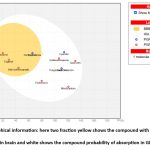 |
Figure 1: Graphical information: here two fraction yellow shows the compound with probability to enter in brain and white shows the compound probability of absorption in GI tract.Click here to view Figure |
Boiled Egg
The yellow region (yolk) on this graphical user interface indicates a high probability of brain penetration. A white area indicates that the gastrointestinal tract is likely to absorb it passively. There is no differentiation between the white and yolk regions. If a spot is determined to be a non-substrate of P-gp (PGP−), it is colored red; if it is determined that P-gp successfully releases it, it is colored blue (PGP+).
Fluroquinolone and Sunitinib are predicted to passively cross the blood-brain barrier (in the yolk) but pump out from the brain (blue dot), while polyphenolic catechin and cyanidin are predicted to be well-absorbed but not access the brain (in the white) and PGP+ (blue dot). It is expected that monoterpenes, limonene, carvacrol, eugenol, and allyl isothiocyanate will penetrate the brain (in the yolk) and not be released actively (red dot). It is anticipated that nitrofurantoin, quercetin, fosfomycin, and sulfamethoxazole will be effectively absorbed but not prone to active release. Since it is outside the plot’s range, one molecule oil should not be absorbed or BBB permeant.
Table 8: Dru Map prediction
| name | fa_human | papp_ human_ caco2 |
d_sol74 | fe_human | cr_type _human |
clr_human | fu_p_ human _class |
fu_p_ human _value |
clint_ human |
| Allyl isothiocyanate | High | High | Low | Medium-High | Secretion | 0.0909 | Medium | 0.2565 | Stable |
| Cyanidin | High | Low | Low | Low | Secretion | 0.016734 | Low | 0.0519 | Stable |
| Quercetin | High | Low | Low | Low | Intermediate | 0.009642 | Low | 0.0594 | Stable |
| Limonene | High | Low | High | Low | Intermediate | 0.025338 | High | 0.1421 | Stable |
| Catechin | Medium | Low | Low | Medium-High | Secretion | 0.046878 | Low | 0.1172 | Stable |
| Carvacrol | High | High | High | Low | Reabsorption | 0.002976 | High | 0.2511 | Moderate |
| Eugenol | High | High | High | Low | Reabsorption | 0.005664 | High | 0.4016 | Moderate |
| oils | Low | Low | Low | Low | Intermediate | 0.008076 | Low | 0.048 | Stable |
| Polyphenolic Catechin | Medium | Low | Low | Medium-High | Secretion | 0.046878 | Low | 0.1172 | Stable |
| monoterpenes | Medium | Low | High | Medium-High | Intermediate | 0.022734 | Low | 0.1002 | Stable |
| Sulfamethoxazole | High | High | High | Low | Reabsorption | 0.002646 | High | 0.1821 | Moderate |
| Nitrofurantoin | High | Low | High | Low | Reabsorption | 0.008688 | High | 0.4411 | Stable |
| Fosfomycin | Medium | Low | High | Medium-High | Intermediate | 0.104166 | High | 0.5539 | Stable |
| Fluroquinolones | Medium | Low | High | Low | Reabsorption | 0.004746 | Low | 0.0778 | Stable |
| Sunitinib | Medium | Low | High | Low | Reabsorption | 0.004746 | Low | 0.0778 | Stable |
Conclusion
Antimicrobial, antioxidant, anti-candida, anti-inflammatory and antibacterial are the potential biological activities of the phytoconstituents taken for the study. The findings of the ADME research suggested that medicinal plant containing Allyl isothiocyanate, Cyanidin, Quercetin, Limonene, Catechin from cranberry, Carvacrol and Eugenol from Coleus Aromaticus and Ocimum Sanctum, oils from Syzygium aromaticum and Cymbopogon citratus, Polyphenolic Catechin from Camellia sinensis and monoterpenes from Ocimum suave have the potential for drug development study. Dru MAP results also confirms stability of compound calculated by Swiss ADME. Our research may serve as the foundation for further in vitro and in vivo research of Phyto drug from these phytoconstituents.
Acknowledgement
The authors are very grateful to amity university for providing opportunity to perform this study.
Funding Sources
The author(s) received no financial support for the research, authorship, and/or publication of this article.
Conflict of Interest
The authors do not have any conflict of interest.
Data Availability Statement
This statement does not apply to this article.
Ethics Statement
This research did not involve human participants, animal subjects, or any material that requires ethical approval.
Informed Consent Statement
This study did not involve human participants, and therefore, informed consent was not required.
Clinical Trial Registration –
This research does not involve any clinical trials.
Permission to reproduce material from other sources
Not Applicable
Author Contributions
Nisha Mehlawat: Conceptualization, Methodology, Writing – Original Draft.
Jinny Tomar: Supervision, Analysis, Review & Editing, final Approval.
Ravi Datta Sharma: Supervision, Analysis, Review & Editing, final Approval.
Deepak Chand Sharma: Supervision, Analysis.
References
- Stamm WE, Norrby SR. Urinary tract infections: disease panorama and challenges. J Infect Dis. 2001;183 Suppl 1:S1-S4. doi:10.1086/318850
CrossRef - Head KA. Natural approaches to prevention and treatment of infections of the lower urinary tract. Altern Med Rev. 2008;13(3):227-244.
- Das S. Natural therapeutics for urinary tract infections-a review. Futur J Pharm Sci. 2020;6(1):64. doi:10.1186/s43094-020-00086-2
CrossRef - Kostakioti M, Hadjifrangiskou M, Hultgren SJ. Bacterial biofilms: development, dispersal, and therapeutic strategies in the dawn of the postantibiotic era. Cold Spring Harb Perspect Med. 2013;3(4):a010306. Published 2013 Apr 1. doi:10.1101/cshperspect.a010306
CrossRef - Mutters NT, Mampel A, Kropidlowski R, et al. Treating urinary tract infections due to MDR E. coli with Isothiocyanates – a phytotherapeutic alternative to antibiotics?. Fitoterapia. 2018;129:237-240. doi:10.1016/j.fitote.2018.07.012
CrossRef - Borukh IF, Kirbaba VI, Senchuk GV. Antimikrobyne svoistva kliukvy [Antimicrobial properties of cranberry]. Vopr Pitan. 1972;31(5):82.
- Kahn HD, Panariello VA, Saeli J, Sampson JR, Schwartz E. Effect of cranberry juice on urine. J Am Diet Assoc. 1967;51(3):251-254.
CrossRef - Sobota AE. Inhibition of bacterial adherence by cranberry juice: potential use for the treatment of urinary tract infections. J Urol. 1984;131(5):1013-1016. doi:10.1016/s0022-5347(17)50751-x
CrossRef - Zafriri D, Ofek I, Adar R, Pocino M, Sharon N. Inhibitory activity of cranberry juice on adherence of type 1 and type P fimbriated Escherichia coli to eucaryotic cells. Antimicrob Agents Chemother. 1989;33(1):92-98. doi:10.1128/AAC.33.1.92
CrossRef - Ofek I, Goldhar J, Zafriri D, Lis H, Adar R, Sharon N. Anti-Escherichia coli adhesin activity of cranberry and blueberry juices. N Engl J Med. 1991;324(22):1599. doi:10.1056/NEJM199105303242214
CrossRef - Pereira RS, Sumita TC, Furlan MR, Jorge AO, Ueno M. Antibacterial activity of essential oils on microorganisms isolated from urinary tract infection]. Rev Saude Publica. 2004;38(2):326-328. doi:10.1590/s0034-89102004000200025
CrossRef - Sowmiya S, Soundarapandian P, & Rajan A. Bioactive studies of Mangifera indica aganist bacteria isolated from urine samples. Current Research Journal of Biological Sciences, 2009; 1(3), 139-143.
- Sharma A, Chandraker S, Patel VK, Ramteke P. Antibacterial Activity of Medicinal Plants Against Pathogens causing Complicated Urinary Tract Infections. Indian J Pharm Sci. 2009;71(2):136-139. doi:10.4103/0250-474X.54279
CrossRef - Sosa V, Zunino P. Effect of Ibicella lutea on uropathogenic Proteus mirabilis growth, virulence, and biofilm formation. J Infect Dev Ctries. 2009;3(10):762-770. Published 2009 Dec 15. doi:10.3855/jidc.232
CrossRef - Poovendran P, Vidhya N, & Murugan, S. Antimicrobial activity of Coccinia grandis against biofilm and ESBL producing uropathogenic E. coli. Global J Pharmacol, 2011; 5(1), 23-26.
CrossRef - Khare R. S , Karmakar S, Banerjee, S, Nath, G, Kundu, S, & Kundu K. Uropathogen resistant essential oils of coleus aromaticus and ocimum sanctum. International Journal of Pharmaceutical Sciences and Research, 2011; 2(8), 2168.
- Khan MS, Ahmad I. Biofilm inhibition by Cymbopogon citratus and Syzygium aromaticum essential oils in the strains of Candida albicans. J Ethnopharmacol. 2012;140(2):416-423. doi:10.1016/j.jep.2012.01.045
CrossRef - Reygaert W, Jusufi I. Green tea as an effective antimicrobial for urinary tract infections caused by Escherichia coli. Front Microbiol. 2013;4:162. Published 2013 Jun 18. doi:10.3389/fmicb.2013.00162
CrossRef - Tibyangye J, Okech MA, Nyabayo JM, Nakavuma JL. In vitroAntibacterial Activity of Ocimum suave Essential Oils against Uropathogens Isolated from Patients in Selected Hospitals in Bushenyi District, Uganda. Br Microbiol Res J. 2015;8(3):489-498. doi:10.9734/BMRJ/2015/17526
CrossRef - Dotis J, Stabouli, S, Pavlaki A, Papachristou F, & Printza N. Cranberry standardized capsules may prevent recurrences of urinary tract infections in children. Clinics in Pediatrics, 2016; 1(1).
- Das S, Naik P, & Panda P. Effect of Hemidesmus indicus R. Br. root extract on urinary tract infection causing bacteria. Int J Herbal Med, 2017; 5(5), 160-168.
- Das S, Panigrahi S, & Panda P. Antiurobacterial activity of Punica granatum L. seed extract. European J Med Plants, 2018.
CrossRef - Das S, Sahoo, K. R, & Parida B. Bactericidal activity of Hemidesmus indicus R. Br. root extract against clinically isolated uropathogen, Journal of medicinal plant studies,2018.
CrossRef
- Daina A, Michielin O, Zoete V. SwissADME: a free web tool to evaluate pharmacokinetics, drug-likeness and medicinal chemistry friendliness of small molecules. Sci Rep. 2017;7:42717. Published 2017 Mar 3. doi:10.1038/srep42717
CrossRef - Kawashima H, Watanabe R, Esaki T, et al. DruMAP: A Novel Drug Metabolism and Pharmacokinetics Analysis Platform. J Med Chem. 2023;66(14):9697-9709. doi:10.1021/acs.jmedchem.3c00481
CrossRef - Watanabe R, Esaki T, Ohashi R, et al. Development of an In SilicoPrediction Model for P-glycoprotein Efflux Potential in Brain Capillary Endothelial Cells toward the Prediction of Brain Penetration. J Med Chem. 2021;64(5):2725-2738. doi:10.1021/acs.jmedchem.0c02011
CrossRef - Esaki T, Ohashi R, Watanabe R, et al. Computational Model To Predict the Fraction of Unbound Drug in the Brain. J Chem Inf Model. 2019;59(7):3251-3261. doi:10.1021/acs.jcim.9b00180
CrossRef

This work is licensed under a Creative Commons Attribution 4.0 International License.